
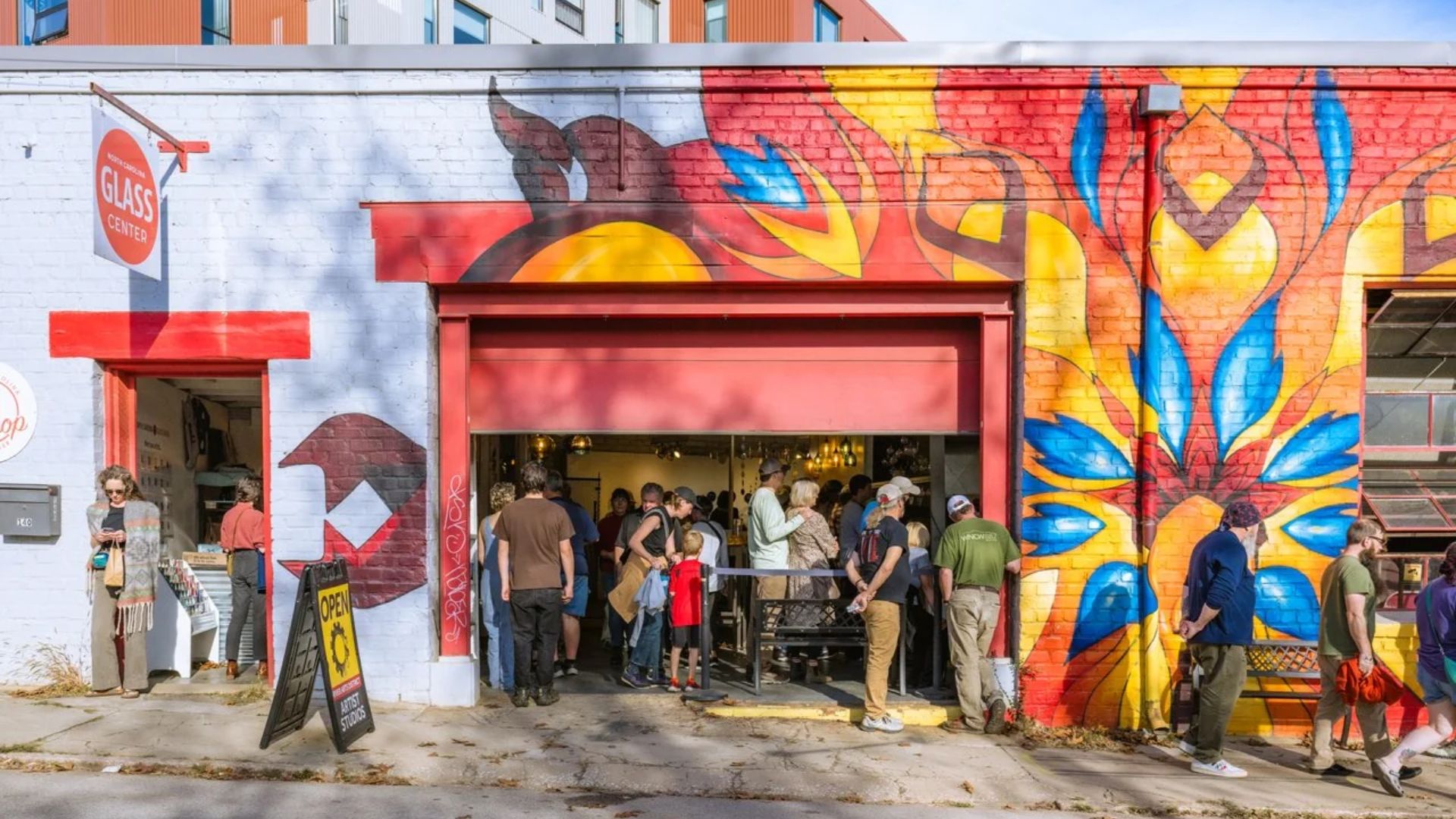
Asheville, North Carolina – The sounds are familiar again in parts of Asheville’s River Arts District. A café door opens. A glass artist prepares a demonstration. People carry paintings between studios, and the smell of coffee drifts past an old industrial building.
On an ordinary afternoon, the neighborhood may seem to be returning to itself. Look more carefully, though, and the signs of Hurricane Helene are still part of the landscape.
When catastrophic flooding struck western North Carolina in September 2024, the French Broad River surged into the district, destroying studios, damaging businesses, and sweeping away years of work. Early estimates suggested that roughly 80 percent of the district had been destroyed or severely affected.

Credit: www.exploreasheville.com
Read also: Amazing Outer Banks lighthouses along a coastal drive, and which ones you can still climb
The damage was not merely architectural. Artists lost equipment and inventories, employees lost workplaces, and small businesses faced an uncertain future.
Two years later, the comeback is real but incomplete. Some spaces have reopened in the district, while other businesses are operating elsewhere in Asheville or remain closed.
Visiting can support the local creative economy, provided travelers approach the neighborhood with curiosity and respect rather than treating disaster damage as entertainment.
Read also: Top 6 reasons this Michigan town of about 5,000 people is a Christmas favorite

Credit: www.riverartsdistrict.com
These seven places tell different parts of the story, including two important stops beyond the district itself.
First, understand what has returned and what has not
The River Arts District grew out of former warehouses and industrial buildings along the French Broad River. Over time, artists transformed them into studios, galleries, workshops, and gathering places. It was a neighborhood where visitors could sometimes meet makers at work rather than simply buy a finished souvenir.
Helene damaged that ecosystem in a single devastating event. The return has been uneven because every building faced different structural problems, insurance questions, and financial realities. A business may be open, but its neighboring building may still be undergoing repairs.

Credit: www.riverartsdistrict.com
Another may have moved to a safer part of the city while retaining the name and community connections it built by the river.
That makes present-day planning essential. Don’t rely on pre-2024 travel maps or assume a familiar restaurant is still serving from its old address. The district’s own artist directory and Explore Asheville’s current listings are better starting points.
Treat operating hours as changeable, and consider a weekday visit when you may have more opportunities for conversation inside small studios.
Read also: Some of the best Nashville hot chicken joints where the heat comes on white bread with pickles
1. Summit Coffee at Wedge
Sometimes recovery begins with a simple routine. Before the flood, Summit Coffee was one of the places where neighborhood workers and visitors could pause between studios, meet a friend, or begin a morning with a drink in hand. The 2024 flooding destroyed its former space along Lyman Street, interrupting an everyday part of district life.
Summit Coffee returned to the River Arts District in April 2026 at Wedge Studios. That reopening offered something more meaningful than another coffee counter. For people who had associated the café with the neighborhood before the storm, it represented a familiar business finding its way back.

Credit: river_row_suites (via Instagram)
The Wedge complex is a particularly appropriate place for a comeback. It is a former industrial environment shaped into a creative community, with artists and independent businesses sharing the space. Getting coffee there can be the beginning of a visit rather than the end of one.
Order your preferred drink and take time to explore the surrounding studios when they are open. Do not assume every artist keeps café hours. Each operates independently, and some spaces may be closed for commissions, classes, or private work.
Read also: Must-see Julian-area bakeries where the apple pie comes out warm, flaky and piled high
The practical value of a stop like this is easy to overlook. A coffee purchase may seem small compared with the scale of Helene’s destruction. But successful neighborhoods depend on ordinary spending and regular visitors, not only on big fundraising events. Returning for an espresso is a modest way to participate in the district’s everyday life.
2. Wedge Brewing
The Wedge’s story began long before the flood. The original brewery opened in 2008 in the lower level of a former industrial building beside the railroad tracks. The setting suited the River Arts District: brick walls, working artists nearby, and an atmosphere more interested in creativity than polished uniformity.
The Wedge building dates to 1916 and was transformed into a home for makers under the influence of sculptor John Payne and other artists. Today, Wedge Brewing operates at Wedge Studios on Paynes Way and at Foundy Street in the district. Both locations appear on its current official website, with the Foundy Street location specifically marked as reopened.

Credit: Wedge Brewing
For visitors, the brewery is a place to relax after walking through galleries and workshops. The current offerings include several beer styles, with food trucks or outdoor food service appearing at various times. Check the menu and truck schedule before planning dinner around a specific meal.
The attraction is partly architectural. The old warehouse setting still communicates the neighborhood’s industrial past, while the businesses around it show how those buildings were adapted for a different future. This is not an attraction where every visitor has to order the same signature drink; the point is to enjoy a gathering place that has returned to the district.
If you’re not drinking alcohol, you can still appreciate the building, public gathering spaces, and surrounding artist studios. Check family policies and service rules at the specific taproom. Above all, remember that a reopened business represents employees, suppliers, and neighbors whose work has continued through an exceptionally difficult period.
3. Hi-Wire Brewing
Hi-Wire Brewing is another business whose return matters to the district’s recovery. Its River Arts District operation reopened in 2025 after the flooding, allowing a familiar brewery to become part of the neighborhood’s renewed activity.
The location along Lyman Street is particularly meaningful because the floodwaters affected businesses across the riverfront corridor. When a business reopens in that environment, it provides a practical reason for people to return, park, walk, and spend money at nearby shops.

Credit: Hi-Wire Brewing
Hi-Wire is known for accessible, modern beer styles and a relaxed taproom atmosphere. Its Asheville presence extends beyond this single location, so visitors should select the River Arts District address carefully rather than navigating to another Hi-Wire facility elsewhere in the city.
Pairing a brewery visit with gallery browsing works well because the district offers more than one kind of experience. You might begin at a working studio, pause for a drink, then walk toward another building where artists are displaying new work. The rhythm is slower than a standard attraction-to-attraction itinerary.
As with any recently reopened business, check operating hours directly. The district’s roads, parking areas, and infrastructure may still be affected by construction, and a familiar route may not be the most convenient one on the day you arrive.
It’s tempting to call every reopening a happy ending. A more accurate description is that it is an important step. Businesses can return to service while owners and workers are still dealing with the costs and emotional weight of what happened. That makes a visitor’s thoughtful support especially welcome.
4. North Carolina Glass Center
Some art is best appreciated in the finished form. Glass is particularly fascinating when you can watch the process. At the North Carolina Glass Center, the heat, movement, and careful timing involved in glassmaking turn a studio visit into something memorable.
The center lists an operating River Arts District location at 140C Roberts Street, along with a second location in Black Mountain. The Asheville facility includes gallery and workshop spaces, and its website describes a working hot shop and flame shop with visitor access. This makes it a useful stop for travelers who want to see artists in action rather than simply browse shelves.
Credit: Wedge Brewing

Credit: North Carolina Glass Center
Glassblowing is demanding work. Material is heated until it becomes workable, then shaped through a sequence of controlled movements that can look almost effortless from a distance. The finished object may be delicate, but the process requires concentration, equipment, and considerable practice.
The center’s current posted hours generally run Wednesday through Monday, with Tuesday closed, though individual classes and demonstrations follow their own schedules. If a live demonstration is your main reason for visiting, confirm the program in advance. The street outside has rough sidewalks in places, and the center advises visitors to use care when approaching the entrance.
Buying a piece of locally produced glass is one way to support the district’s makers. Taking a class may create a more personal memory. And simply watching an artist work can help explain why the loss of tools and studio space in Helene was so devastating. Art is not only the object on display; it is the skill, time, and working environment needed to make it.
5. 12 Bones Smokehouse
Food was an important part of the River Arts District before Helene, and 12 Bones Smokehouse became one of the neighborhood’s most recognizable names. Its riverfront story is closely connected to the district’s rise as a destination where people could combine art, breweries, and casual meals.
The original river-area location was devastated by the 2024 flooding. Older guides still mention addresses near the district, but those listings should not be treated as proof that the same counter has reopened. The business’s current official website lists an operating Smokehouse at 2350 Hendersonville Road in Arden, south of central Asheville.
That makes this a related Asheville food stop rather than a walkable River Arts District destination. It’s worth explaining the distinction before sending travelers across town expecting to find ribs next to a studio.
The restaurant describes smoked meats prepared over hardwoods, including oak and cherry. Its menu includes familiar barbecue options, with preparations influenced by different Southern traditions. If you want a substantial meal after a day exploring Asheville, the south-side location is a practical option.
Visit with an understanding of the broader context. A restaurant may remain part of a city’s food identity even when disaster forces it to operate away from the neighborhood where many visitors first discovered it. Supporting the current business is not the same as visiting its old riverfront site, but it can still support people and a culinary tradition shaped by Asheville.
6. White Duck Taco Shop
White Duck Taco Shop needs a more careful description than the other stops. Its River Arts District restaurant at 388 Riverside Drive was closed after the 2024 flooding. In September 2026, a fire caused further damage to the already closed building, according to local reporting. It would be inaccurate to recommend that address as an open restaurant today.
The business does, however, operate a downtown Asheville restaurant at 12 Biltmore Avenue. Its official website currently marks the River Arts District location as temporarily closed and directs diners to its other locations. For visitors wanting the menu, downtown is the relevant option.
That changes how the experience fits into a recovery itinerary. You won’t be eating beside the river at the old Quonset-hut building. Instead, the downtown location offers a chance to enjoy food from a business with long ties to Asheville while the future of the damaged site remains unresolved.
White Duck serves creative tacos that combine familiar ingredients with less conventional ideas. The menu and exact availability change, so order according to the current counter rather than chasing an item from a years-old online review.
The September fire is also a reminder that the phrase “Asheville is back” can sound too complete. Many people and businesses are rebuilding, but not every story has reached its conclusion. Visitors can help by patronizing open locations, respecting closed sites, and avoiding the temptation to treat damaged buildings as photographic attractions.
7. Biltmore Estate
Biltmore Estate is not inside the River Arts District. It belongs here as a broader measure of how Asheville’s visitor economy has been recovering since Helene. The estate suffered damage across parts of its property and closed temporarily after the storm, reopening on November 2, 2024.
The estate’s recovery matters because tourism supports businesses and workers across the region. A visitor who comes for Biltmore may also choose to explore neighborhood studios, eat at independent restaurants, and spend an additional day in town. That ripple effect is part of why Asheville’s recovery has never been limited to one flooded street.
Biltmore House and the surrounding grounds offer a different experience from the industrial buildings of the district. The grand estate is known for architecture, gardens, and seasonal programs. Admission is ticketed, and prices vary by date and package. Check the current official ticket page rather than assuming an old rate is still valid.
For a thoughtful trip, consider Biltmore as one separate day and the River Arts District as another. Rushing between them misses the character of both. The estate offers a large, planned visitor experience. The district is more rewarding when you allow time to enter small galleries, speak with artists when appropriate, and explore on foot.
Biltmore’s reopening was an important milestone in western North Carolina’s broader recovery. But the district’s story remains more personal and uneven. Both deserve attention, provided the differences are made clear.
How to visit without turning recovery into spectacle
Begin with the River Arts District’s current directory, not a pre-storm list of must-see businesses. Choose a few open studios, then add a café or restaurant. Park legally, respect construction barriers, and don’t enter damaged buildings. Ask artists about their current work rather than expecting them to recount traumatic experiences for visitors.
Buying a small piece of art, booking a workshop, ordering coffee, or returning for another visit can be more useful than a hurried photo stop. If a business is closed, accept the closure and find another operating place nearby. Asheville has many ways to welcome travelers without requiring every part of the recovery to be finished first.
Two years after Helene, the River Arts District is neither a ruin nor a place where nothing happened. It is an active neighborhood carrying visible evidence of enormous loss. And the most meaningful part of visiting may be something ordinary: a café serving coffee, a gallery opening its doors, or an artist making something new in a room where the lights are finally on again.


