
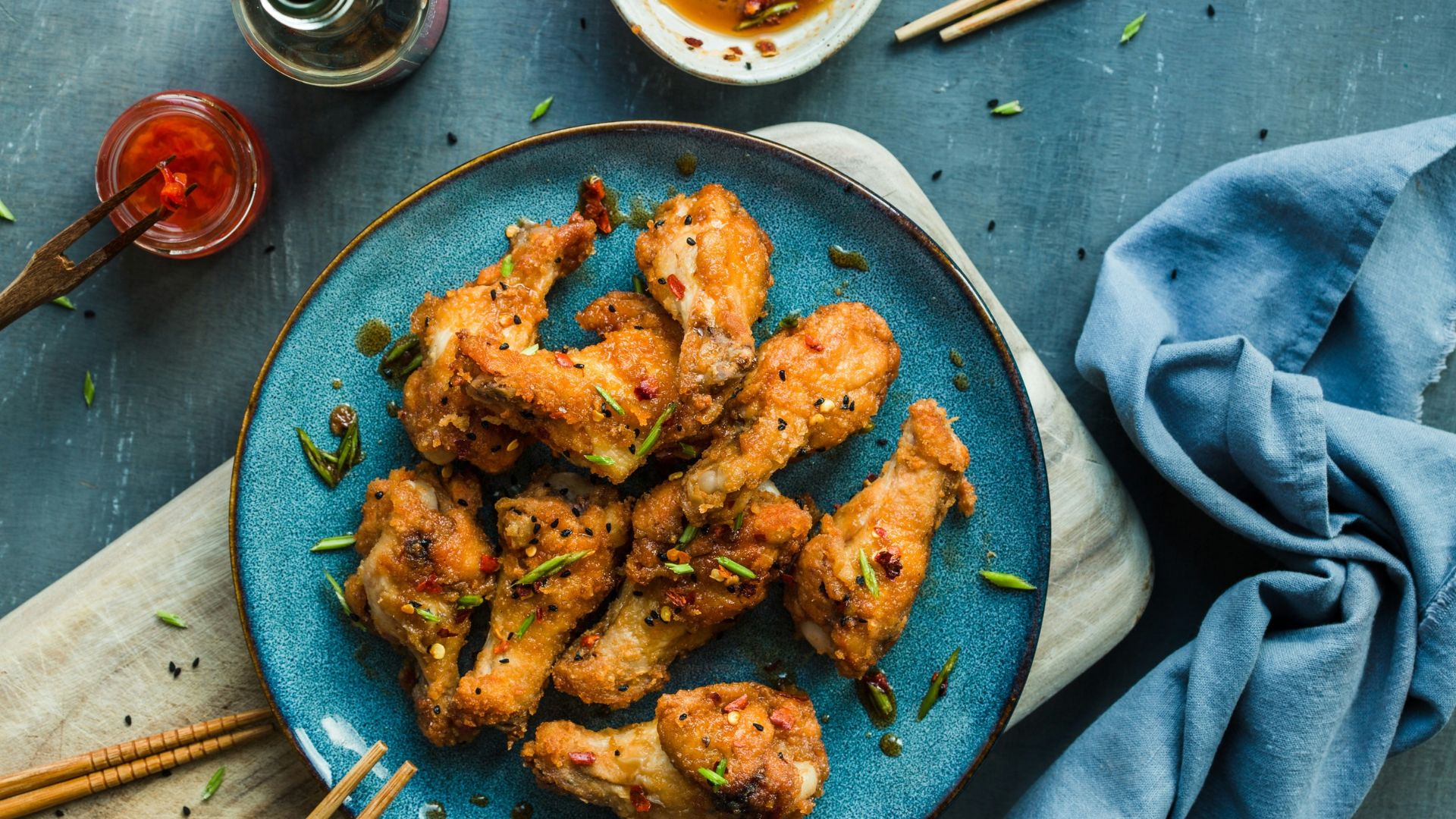
Nashville, Tennessee – The story begins with a plate of chicken that was supposed to teach somebody a lesson. According to Nashville legend, a woman angry with Thornton Prince prepared his fried chicken with an alarming amount of pepper.
The plan, apparently, was to make breakfast uncomfortable. Instead, Prince liked the fiery bird so much that he asked for more, and an entire city eventually developed a food tradition around the idea.
That is the story people love to tell, anyway. It has been passed down for generations, and its details belong to family lore rather than a carefully documented restaurant receipt.

Credit: Unsplash
What is certain is that Nashville’s hot chicken tradition grew from the city’s Black food culture into a specialty recognized far beyond Tennessee.
The classic serving is gloriously uncomplicated: fried chicken coated in a peppery, often cayenne-based seasoning or oil, resting on white bread with pickle chips nearby.
The bread catches some of the spicy fat, and the pickles provide a sharp contrast. The result can be delicious, punishing, or both, depending on your heat level.
These five restaurants offer different ways to experience the tradition, from its family originator to newer interpretations. A little advice before we begin: don’t let pride choose the spice level for you.
Read also: Must-see Julian-area bakeries where the apple pie comes out warm, flaky and piled high

Credit: Unsplash
What makes Nashville hot chicken different?
Ordinary fried chicken can be crisp, juicy, and beautifully seasoned. Nashville hot chicken adds a defining layer of heat, often carried in a seasoned oil or paste applied after frying.
The pepper penetrates the crust and turns the exterior a vivid reddish color in many versions.
The cooking method and spice mixture vary by restaurant. Some use a relatively dry finishing rub. Others produce a glossy coating. A mild order at one place may feel hotter than a medium somewhere else, and the most extreme levels are not designed for everyone to enjoy casually.

Credit: Unsplash
White bread and pickles are part of the classic presentation rather than decorative extras. The bread absorbs drippings and gives you something plain between bites. Pickles provide acidity and crunch, helpful when the rich chicken and pepper begin competing for attention.
Ordering the correct heat level is especially important for visitors unfamiliar with the style. It’s perfectly reasonable to choose the lowest setting, enjoy the flavor, and move upward on another visit.
You aren’t required to prove your toughness at the counter. Nashville hot chicken should be a good meal, not a regrettable story you tell afterward.
1. Prince’s Hot Chicken
Every Nashville hot chicken route should begin with Prince’s. The business traces its origins to Thornton Prince and the family recipe associated with the city’s earliest hot chicken tradition.
Andre Prince Jeffries, his great-niece, became the steward of the restaurant in the late twentieth century and helped protect its place in local food history.
Read also: 8 Texas Hill Country towns that glow with Christmas lights every holiday season

Credit: Prince’s Hot Chicken
The familiar revenge-story legend gives Prince’s a memorable opening, but the restaurant matters for more substantial reasons. Its history is tied to Black entrepreneurship, neighborhood cooking, and a regional dish that became internationally recognizable. Prince’s received a James Beard America’s Classics award in 2013, recognition of a long-lasting contribution to American food culture.
The restaurant has changed addresses over the years, and relying on an old location can lead to disappointment. The official website currently lists a South Nashville location at 5814 Nolensville Pike, a downtown counter in Assembly Food Hall at 5055 Broadway, and additional locations including Tanger Outlets and the airport.
Start with chicken at a manageable heat level, served in the traditional style with bread and pickles. The seasoning is the point, but it shouldn’t obscure the quality of the chicken itself. Pay attention to the crust, the rich meat beneath it, and the way the heat develops after the first bite.
Read also: This tiny Texas town has two famous pie shops, and travelers drive hours for a slice

Credit: Prince’s Hot Chicken
The Nolensville Pike restaurant lists Monday through Saturday service beginning at 11 a.m., with Sunday closed. The Assembly Food Hall counter has a different schedule. Choose the location that suits your route rather than assuming the entire chain follows identical hours.
A visit to Prince’s is about more than comparing spice levels. It’s an opportunity to recognize the family and community traditions behind a dish that many newer businesses have helped popularize. That history deserves as much attention as the heat.
2. Bolton’s Spicy Chicken & Fish
Bolton’s Famous Hot Chicken & Fish is one of the most distinctive stops in East Nashville. Its address at 624 Main Street puts it in an area with deep connections to the city’s Black-owned food businesses, and the restaurant’s reputation rests on both hot chicken and hot fish.
Read also: 7 Places in Florida to see manatees this winter, from free viewing decks to spring-fed boardwalks

Credit: Bolton’s Spicy Chicken & Fish
The fish is especially important. Visitors who have heard only about Nashville chicken sometimes overlook the city’s broader tradition of fried, seasoned seafood. Bolton’s shows how the same devotion to spice and crisp texture can produce a memorable meal without a chicken wing in sight.
The restaurant is known for a drier-feeling spice application than some competitors, giving the coating a different texture. Heat choices still matter, and even a moderate level may be intense for someone accustomed to ordinary seasoned fried food. Ask staff for guidance rather than trying to estimate its strength from another restaurant’s scale.
For a first visit, consider sharing a chicken order and a fish order. That gives you a better understanding of why Bolton’s has a following of its own rather than merely being another stop on a chicken checklist. The contrast in texture and flavor can make the meal more interesting.
Claude’s brief gives older hours that no longer match the current business website. Bolton’s official listing now shows daily service, generally from 11 a.m., with later closing on Friday and Saturday. Confirm the current schedule if you’re planning a late meal or visiting around a holiday.

Credit: Bolton’s Spicy Chicken & Fish
The dining experience is relatively straightforward. Order at the counter, be ready for spice, and give yourself a moment before adding more heat. One of the nicest qualities of a true local specialty is that it doesn’t have to look fancy to be memorable.
3. Hattie B’s
Hattie B’s is the name many visitors recognize first, partly because the business helped introduce Nashville-style hot chicken to a much wider audience. The restaurant’s original Midtown location is at 112 19th Avenue South, near the city’s busy central neighborhoods.

Credit: Hattie B’s
The company began in 2012, founded by father-and-son team Nick Bishop Sr. and Nick Bishop Jr. Some older summaries give 2010 as the opening year, but the restaurant’s own history specifies August 9, 2012. That small correction matters when telling a business’s story.
Hattie B’s menu is designed to make the heat choices easy to understand. It runs from Southern, meaning no heat, through mild, medium, and hot, then into much more serious territory. The highest level is called “Shut the Cluck Up!!!” and is not intended as an ordinary first-time order.

Credit: Hattie B’s
A sensible introduction is a hot chicken sandwich or a plate with sides, ordered at mild or medium depending on your preferences. The restaurant offers familiar Southern accompaniments, including pimento mac and cheese and banana pudding. Those provide a welcome contrast to the spice and make the meal accessible for visitors who don’t want their entire lunch to revolve around heat.
Hattie B’s is a relatively modern business compared with Prince’s, but that is part of the story. Nashville hot chicken has evolved from a local tradition into an entire food category, and the company helped make that transition visible. The atmosphere is casual and designed for steady service, although popular times can still bring queues.

Credit: Hattie B’s
If you’re traveling with children or friends who prefer little spice, the range of heat options is an advantage. Everyone can order something appropriate without abandoning the hot chicken theme. Just remember that a lower setting doesn’t make the meal less authentic to your own taste.
4. 400 Degrees
At 400 Degrees, the menu turns the heat decision into a number. That may sound like a playful marketing idea, but it also reflects owner Aqui Simpson Hines’s personal relationship with Nashville hot chicken.
Hines grew up enjoying Prince’s and later developed her own seasoning style, creating a restaurant that belongs to the city’s newer generation of hot chicken businesses. Published accounts differ slightly on the founding year, so it is safer to describe the restaurant as established in the mid-2000s rather than insisting on a single date.

Credit: 400 Degrees
The main location is at 3704 Clarksville Pike. Its menu uses heat levels such as 0, 100, 200, and 400 degrees, with some even hotter possibilities discussed in coverage of the restaurant. These numbers are menu categories, not literal cooking temperatures or a standardized scientific scale. Treat them as the kitchen’s own guide to intensity.
The restaurant’s version can differ from the classic style in spice balance and presentation. That makes it an especially worthwhile stop if you’ve already tried Prince’s or Bolton’s and want to experience how another owner interprets the tradition.
Start low enough to appreciate the flavor. A chicken plate with a manageable level of heat is a better introduction than choosing a punishing number just because it sounds impressive. Pay attention to the coating and how it interacts with the chicken’s crust.
400 Degrees also illustrates how hot chicken continues to be shaped by individual cooks. The dish has a recognizable foundation, but it isn’t frozen in a single recipe. Different owners bring their memories, preferences, and creativity to the same basic idea, producing a food culture richer than a simple ranking of heat levels.
5. Pepperfire
Pepperfire occupies an interesting position between Nashville hot chicken’s historic foundations and its more inventive recent interpretations. Founded in 2010, the restaurant became known for carefully developed spice blends and playful menu ideas.
Older guides place it in East Nashville and describe it as a small shack. That history is part of its story, but the current business has moved. Pepperfire’s official website now lists 5104 C Centennial Boulevard in the Nations neighborhood, with dine-in, pickup, and delivery service.

Credit: Pepperfire
That relocation is worth making clear because a traveler relying on an old article may end up searching the wrong part of town. The current location is open Tuesday through Saturday from 11 a.m. to 9 p.m., according to the business. Check holidays and special closures before setting off.
The menu has featured tenders, sandwiches, and inventive combinations that go beyond the original plate of hot chicken on white bread. Pepperfire is a good choice for people who want to explore how the style has grown without abandoning its defining heat.
A first-time visitor should ask about the available heat levels and choose a preparation that highlights the chicken rather than piling on every possible topping. After tasting it, you can decide whether a more elaborate sandwich belongs on your next visit.

Credit: Pepperfire
The restaurant’s continued identity despite its change of address offers a small lesson in food geography. Nashville’s hot chicken culture isn’t confined to one historic neighborhood anymore. As the city grows, businesses move, expand, and find new customers, carrying their recipes and reputations into different parts of town.
How to build a hot chicken day without regretting it
Five spicy meals in a single afternoon would be a questionable decision for most people. A better plan is to choose two restaurants, share portions, and leave room for other Nashville food and attractions. Prince’s and Bolton’s make an interesting historical comparison. Hattie B’s is practical for a group with different heat preferences. 400 Degrees and Pepperfire offer distinctive interpretations for anyone who enjoys exploring the genre.
Water is important, but it may not make intense capsaicin heat disappear. Dairy-based sides or a mild dessert can be more comforting, and a little patience often works better than frantically ordering something even spicier. Don’t let anyone pressure you into the highest level. There is no prize for suffering.
Bring napkins and wear clothes you won’t mind getting a little messy. Spiced oil can stain, the bread may become soaked, and the chicken can be too hot to handle immediately after serving. Give it a moment. The meal should be enjoyable, not rushed.
Most importantly, recognize where the tradition began. Nashville hot chicken did not emerge as a television challenge or a social-media stunt. It grew from local Black-owned businesses, family recipes, and customers who appreciated a particular combination of fried chicken and serious seasoning.
The revenge story may be the famous hook, but the lasting story is much better: generations of people kept cooking, sharing, and improving a dish until it became inseparable from the city. Order the chicken with white bread and pickles, choose a heat level you can actually enjoy, and let Nashville do the rest.


