
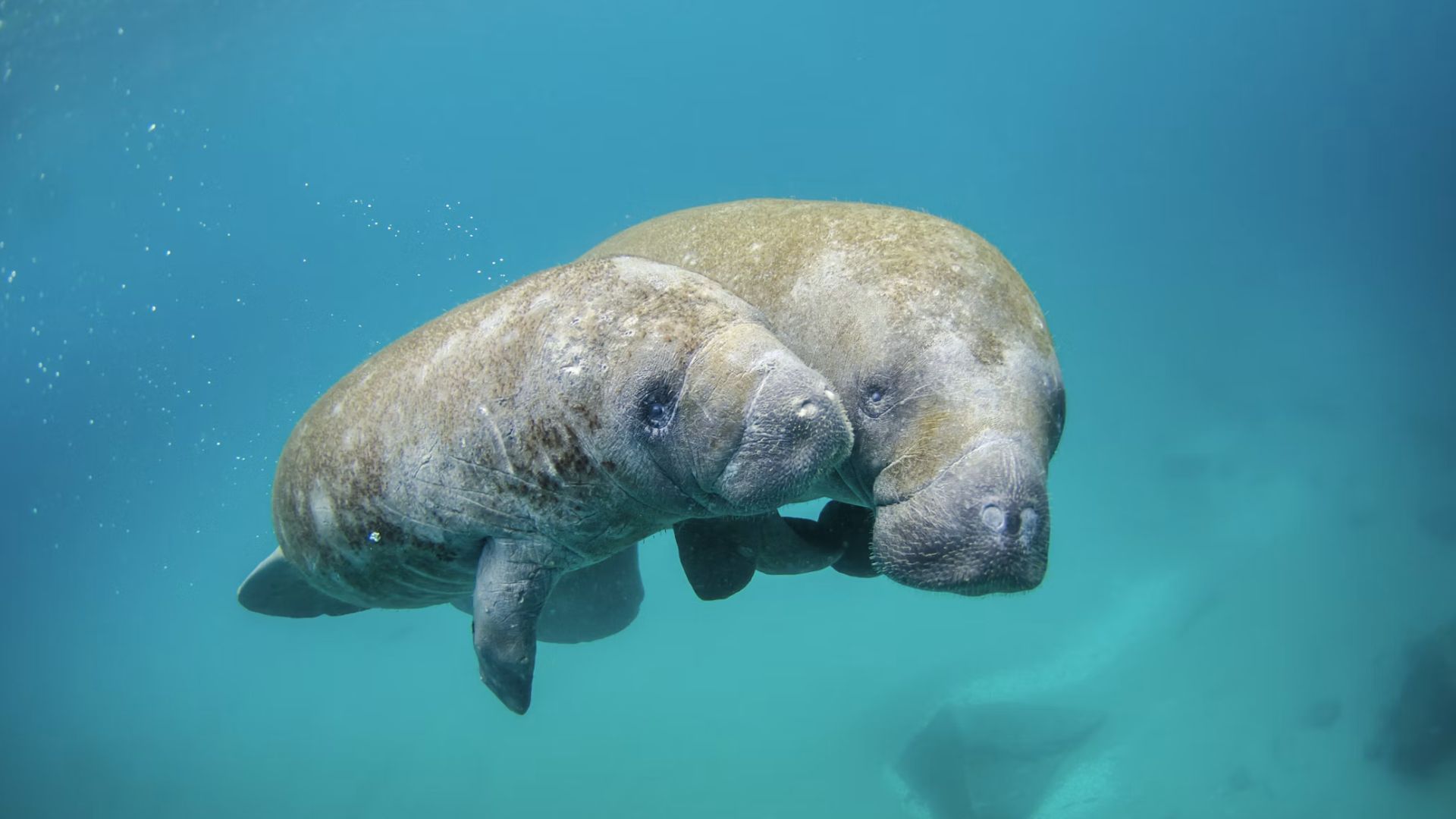
A cold Florida morning can produce a wonderful surprise. Somewhere beneath water so clear you can see the bottom, broad gray backs begin appearing. A round nose breaks the surface. Another animal rises to breathe, then disappears with hardly a splash.
Before long, a spring that seemed empty is full of manatees resting in water that feels much warmer than the river outside.
Read also: 7 Historic NYC bars that have been pouring drinks for more than 130 years

Credit: Unsplash
That’s Florida’s winter wildlife season at its most appealing. While visitors farther north are searching for sunshine, manatees are searching for something more specific: water warm enough to help them survive. The animals may gather in remarkable numbers at natural springs or near power stations that release warmer water.
Watching them from a boardwalk can be far more memorable than another crowded beach afternoon.
There is one important catch. Manatees are wild animals, not performers. A cold front can bring hundreds to a viewing area, while a mild day may leave the same water almost empty.
Read also: 6 Buffalo spots serving beef on weck the old-fashioned way that you won’t regret
The right location and a little patience help, but timing and respect for the animals matter most.

Credit: nwf.org
These seven spots offer different ways to see them, from completely free observation decks to state parks and protected springs. Some are excellent for families.
Others require advance tickets or careful planning. All reward visitors who remember that the manatees’ safety comes first.
Why winter changes everything for Florida manatees
Manatees may appear perfectly content drifting through Florida rivers and coastal waters, but cold temperatures create a serious problem for them. They are large marine mammals with comparatively little insulation against sustained cold. Once surrounding water becomes too chilly, they need to find warmer refuge.

Credit: Wikipedia
Natural springs provide one answer. Florida’s spring water often stays around 72 degrees Fahrenheit throughout the year. That makes the water comfortably refreshing during summer and a potential lifesaver during winter. Warm-water discharge canals at certain power plants create another refuge where manatees gather during cold spells.
The Florida Fish and Wildlife Conservation Commission identifies winter as the best time to visit many viewing areas. November through March is the broad season, but the most impressive gatherings often follow several colder days. A morning after a cold front can be especially productive.
Read also: 8 Reading terminal market stands Philadelphia locals say you can’t skip
You’ll also want to pay attention to signs. Protected areas may prohibit swimming, boating or approaching wildlife during winter. These aren’t obstacles to the experience. They’re part of what makes it possible for manatees to return.
1. Blue Spring State Park — Orange City
If you want a place with an established history of winter manatee counts, Blue Spring is hard to beat. This Volusia County state park protects a clear spring run that connects to the St. Johns River. As the river cools, manatees begin moving toward the warmer spring water.
The change over the decades has been extraordinary. Researchers documented only a few dozen animals at the site in the 1970s. On January 1, 2024, observers counted a record 932 manatees. That number isn’t a daily promise, but it illustrates why the park has become such an important winter refuge.
Read also: 6 Chicago beef stands where the Italian beef comes dipped, juicy and topped with giardiniera

Credit: Florida State Parks
Visitors watch from established boardwalks and overlooks rather than entering the water. During the designated winter period, swimming and many other water activities in the spring run are restricted to protect the animals.
The setting adds plenty to the experience. The walkway follows the spring run beneath trees, allowing visitors to stop at different vantage points. On a clear day, a manatee’s entire shape may be visible below the surface. At other times, you notice a slow-moving shadow, followed by a snout appearing for air.
The park is at 2100 West French Avenue in Orange City and opens at 8 a.m., closing at sunset. Standard admission is $6 per vehicle.
Most importantly, online day-use reservations became mandatory July 15, 2026, including for annual passholders, pedestrians and cyclists. Do not drive over expecting to join a simple walk-up queue. Reserve ahead through the state park’s system.
2. Three Sisters Springs — Crystal River
Some Florida springs are beautiful enough to justify a visit without a single manatee. Three Sisters Springs is one of them. Its clear water has made the Crystal River area famous, and winter brings an additional attraction when manatees arrive seeking warmth.

Credit: www.crystalriverfl.org
The springs lie within the Crystal River National Wildlife Refuge, established specifically to protect manatee habitat. Land-based visitors follow trails and an elevated boardwalk with overlooks around the water. On a cold morning, the view can reveal animals resting together in an otherwise tranquil pool.
The experience is structured for good reason. You cannot enter the water from the refuge’s land access points, and visitors on the water cannot simply climb onto its banks. Those restrictions protect shoreline vegetation and reduce disturbance to the wildlife.
One pleasant surprise is how manageable the walks are. The refuge has more than two miles of generally easy trails, and the boardwalk provides multiple places to pause. You can take your time, watch for movement and learn why the springs are ecologically valuable.

Credit: www.crystalriverfl.org
The land-access center is at 917 Three Sisters Springs Trail in Crystal River. Winter admission, from November 15 through March 31, is currently listed at $20 for a regular adult ticket and $7.50 for children ages six through fifteen. Children five and younger enter free. Prices vary for residents, seniors and eligible passholders.
The entry price includes shuttle service. The last admission tickets are sold at 3:30 p.m., and the refuge’s land-access day normally ends at 4:30 p.m. Don’t assume you can park at the springs’ front gate; general parking there isn’t available.
3. Ellie Schiller Homosassa Springs Wildlife State Park — Homosassa
Not every successful manatee outing needs to depend completely on luck. Homosassa Springs offers a different experience, combining a natural spring environment with wildlife interpretation and animals receiving long-term care.
This state park at 4150 South Suncoast Boulevard is known for its underwater observatory and wildlife encounters. Some manatees are permanent residents because injuries prevent them from returning safely to the wild. Others can be seen in the spring area seasonally.

Credit: Ellie Schiller Homosassa Springs Wildlife State Park
That combination gives visitors an opportunity to learn more about manatees than they might from a distant silhouette alone. Interpretive signs and staff programs help explain the animals’ biology, the dangers they face and why protected winter habitat matters.
The wildlife park also features native Florida animals beyond manatees. You may encounter exhibits involving birds, reptiles and other species during the same visit. For families with children, that makes it easier to build a half-day outing rather than hoping a single viewing deck holds everybody’s attention for an hour.
Regular adult admission is listed at $13, with tickets for children ages six to twelve at $5. The park generally opens at 9 a.m. and remains open into late afternoon, although seasonal programs and some transportation features can change.
One detail worth checking before leaving is the park’s boat and tram access. Some transport options have experienced interruptions due to water conditions, and the park’s official site provides updates.
4. Manatee Lagoon — West Palm Beach
The surprising thing about this stop is what sits beside the animals: a power station. Manatee Lagoon, an educational center in West Palm Beach, overlooks water warmed by the adjacent Florida Power & Light facility. During colder weather, manatees may gather there in numbers that seem impossible for an ordinary urban waterfront.
The center occupies 6000 North Flagler Drive and offers exhibits explaining manatees and the Lake Worth Lagoon environment. There’s also an observation area where visitors can look into the water without disturbing the animals.

Credit: Manatee Lagoon
Better still, admission and parking are free. That makes Manatee Lagoon particularly appealing for families or travelers fitting a wildlife stop into a larger South Florida itinerary.
During the official manatee season, November 15 through March 31, the center is generally open daily from 9 a.m. to 4 p.m. It closes on certain holidays, and the upstairs observation deck sometimes closes for private events or maintenance. Check the center’s current schedule before heading out.
There is also an online camera, which is one of the smartest planning tools available. If you’re nearby and wondering whether to visit today or tomorrow, take a look before deciding. The camera can’t guarantee what you’ll see after you arrive, but it provides useful information.
5. Tampa Electric Manatee Viewing Center — Apollo Beach
Another electricity facility makes an unexpectedly beautiful manatee sanctuary, this time on Tampa Bay. Tampa Electric’s Manatee Viewing Center operates beside the Big Bend Power Station in Apollo Beach, where warmer water creates refuge during cold weather.
The center has been welcoming visitors for decades and opened its fortieth season on November 1, 2026. Its observation areas allow visitors to watch the water without entering it, and the grounds offer much more than one platform.
There are environmental exhibits, a nature trail and a tall observation tower with wide views across the surrounding landscape. A touch-tank experience with cownose rays and other educational features can make the visit interesting even when the manatees are somewhere else.
The viewing center is at 6990 Dickman Road. The 2026–27 operating season runs from November 1 to April 15, with hours of 10 a.m. to 5 p.m. daily. The trails and tower close earlier, at 4 p.m. The center closes on Thanksgiving, Christmas and Easter, and closes early on Christmas Eve.
Admission and parking are free. That’s especially welcome given how much there is to explore. Tampa Electric also provides live cameras for anyone interested in checking the water before visiting.
Cold water is the key. Tampa Electric says manatees tend to congregate when Tampa Bay drops to about 68 degrees Fahrenheit or lower. During one extremely cold day in the previous season, the utility reported a gathering of about 2,100 animals. That remarkable number is a peak observation, not something visitors should expect routinely.
6. Manatee Springs State Park — Chiefland
West of Gainesville, Manatee Springs offers a more wooded, quiet experience. The spring feeds a run that connects to the Suwannee River, and a long boardwalk allows visitors to enjoy the water, trees and wildlife from land.
The park’s famous boardwalk is approximately 800 feet long, winding among cypress trees near the spring run. Its setting is part of the attraction. Even if the manatees stay out of sight, the combination of clear water, roots and river scenery is distinctly northern Florida.
In winter, manatees may enter the spring and adjoining waterway seeking warmth. The animals aren’t guaranteed, and conditions on the Suwannee influence their movements. Visitors hoping to see them should consider the recent weather rather than relying on a particular hour of the day.
The park is at 11650 Northwest 115th Street in Chiefland. The standard entrance fee is listed at $6 per vehicle. It typically opens at 8 a.m. and closes at sunset.
Unlike the large urban viewing centers, this stop works especially well for travelers who enjoy a little walking and the atmosphere of a Florida forest. The spring area and boardwalk create room for a slower visit, with opportunities to spot birds and other wildlife along the way.
Check current trail or construction notices before traveling. Parks occasionally close portions of boardwalks or facilities for repairs, and seasonal water conditions affect access.
7. Lee County Manatee Park — Fort Myers
A power plant doesn’t sound like the beginning of a nature outing, but once again it becomes the reason manatees gather. Lee County Manatee Park overlooks part of the Orange River near a warm-water discharge canal in Fort Myers.
This county park at 10901 State Road 80 offers places to watch from shore, walking paths, a boardwalk and family-friendly facilities. Visitors can look across the river and canal for the slow movements that signal manatees near the surface.
The setting is especially attractive to families who want to combine wildlife viewing with a straightforward public-park visit. There are picnic facilities, a playground and places to rest between observation attempts.
Here, seasonal timing deserves special attention. Lee County advises that late December through March is generally the strongest window for sightings, once Gulf water temperatures have dropped. An unseasonably warm December day may be less productive than a chilly January morning.
The park opens daily, generally at 8 a.m. with gates closing in the evening or around sunset depending on the facility schedule. The wildlife commission notes that a parking fee applies. County fee schedules have listed seasonal hourly parking charges, so verify the current posted rate rather than assuming the visit is completely free.
This is also a good place to pay attention to water temperature, not only the air temperature shown on your phone. The sea and river conditions determine how strongly the animals seek warmer refuge.
A leisurely visit can be worthwhile even if you don’t immediately see a manatee. Walk the grounds, look for birds and try different vantage points. Quiet patience often produces a better wildlife experience than constantly changing locations.
The best manatee-watching trip isn’t the busiest one
It’s tempting to plan the perfect Florida wildlife day around a record photograph: hundreds of gray animals gathered beneath a bridge, each one close enough to count. But the most satisfying manatee encounter can be much smaller.
Perhaps you spot a single animal rising for air beside a spring. Maybe two manatees glide along a protected channel. You wait, watch, and begin noticing how calmly they move. A few minutes later, another appears.
That is enough to make the trip memorable.
If you have flexibility, visit after a cold spell and choose a location that fits your budget and your tolerance for crowds. Blue Spring and Three Sisters Springs are extraordinary natural sites, but they require more planning and, in the case of Blue Spring, advance reservations. Manatee Lagoon and Tampa Electric offer free, educational alternatives. Homosassa Springs adds a managed wildlife experience. Manatee Springs and Lee County provide more relaxed park settings.
Whatever you choose, keep your distance. Never feed, chase, touch or obstruct a manatee. Follow sanctuary signs and leave the animals room to breathe and rest.
Florida’s winter weather can feel wonderfully mild to people escaping northern snow. For manatees, however, that season is serious business. The warm water they gather in is a refuge, not a tourist attraction created for our convenience.
Enjoy the view quietly. Bring a jacket for the early morning, a little patience, and enough time to watch. Sometimes the best moment of the entire visit is simply a gray nose breaking the surface before disappearing into blue water again.


