
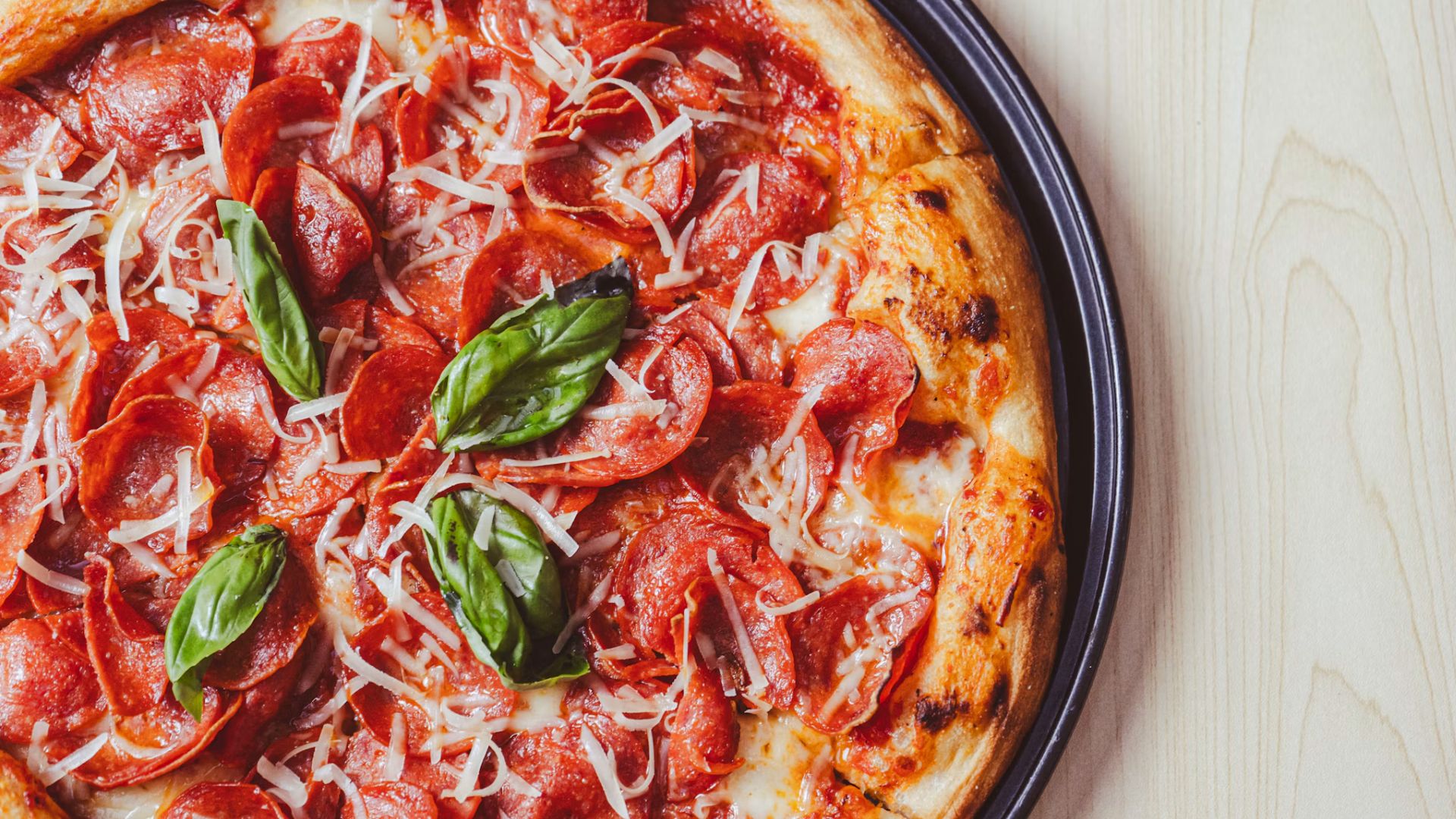
Mention America’s favorite pizza cities and the conversation usually heads toward New York, Chicago or Detroit. People argue about thin crust, deep dish and which place deserves the loudest applause.
Meanwhile, a former steelmaking city in northeastern Ohio has been quietly defending a pizza tradition that doesn’t fit neatly into any of those famous categories.
It has peppers, thick tomato sauce and sharp Romano cheese, and a neighborhood history worth learning before the first slice arrives.
Read also: This hidden Washington waterfall is just a ten-minute walk from the parking lot
Youngstown doesn’t need to win a national championship to make the case that it is a fascinating place for pizza. Its restaurants reflect decades of Italian American cooking, working-class family meals and small businesses that built loyal followings.
The best way to understand the city’s appeal is not to debate rankings from afar. It’s to order a local pie and discover why people around the Mahoning Valley talk about it with such affection.

Credit: Unsplash
The pizza that belongs to Brier Hill
Brier Hill pizza takes its name from a Youngstown neighborhood associated with the city’s Italian immigrant history. The style is recognizable: a sturdy, often pan-baked round with tomato sauce, green bell peppers and Romano cheese.
Read also: 12 Michigan waterfront eateries worth a detour on your next summer drive
Unlike a familiar cheese-covered pizza built around stretchy mozzarella, the sharp grated cheese plays a more assertive role. The result feels savory, direct and deeply connected to home cooking.
The story is older than the modern restaurant scene. Local accounts describe families using homemade tomato sauce, peppers from backyard gardens and simple bread-like dough during years when ingredients needed to stretch.

Credit: Brier Hill Pizza
St. Anthony’s Church helped preserve and popularize the style through Friday sales and community gatherings. That community connection is a large part of what makes the pizza interesting.
There is no need to exaggerate the Depression-era story into one invented scene of dozens of grandmothers baking together in a particular kitchen.
Read also: Hungry drivers find biscuits and sausage gravy at this tiny Kentucky roadside kitchen
The documented tradition already connects the neighborhood, home recipes and church gatherings. Brier Hill pizza grew from food people knew how to make and enjoyed sharing. Its name became a mark of local identity rather than a fashionable marketing invention.
How it differs from familiar American styles
A visitor expecting a large blanket of melted mozzarella may be surprised. Romano brings a sharper and saltier finish, while the peppers add a fresh vegetal contrast to the tomato.
The sauce is often generous, and the crust has enough structure to support a topping combination built around concentrated flavors rather than sheer volume.
Read also: This South Carolina island has no chain restaurants and that’s exactly why visitors love it
That doesn’t mean every Brier Hill pizza tastes identical. Restaurants interpret the style differently, and dough thickness, sauce seasoning and pepper preparation vary from one kitchen to another.
Some cooks follow family recipes closely; others adapt the approach to contemporary restaurant equipment. Those distinctions are part of the pleasure of trying more than one pizzeria in the Mahoning Valley.
Brier Hill is also proof that regional pizza histories can be highly specific. Detroit’s square-pan tradition has its own roots. New York’s slice culture tells another story. Youngstown’s version reflects its neighborhoods and family kitchens.
There isn’t a useful reason to rank them all by one universal standard. A style can be essential to one community and unfamiliar everywhere else.
Start with Wedgewood Pizza
Wedgewood Pizza, with locations associated with the Austintown and Boardman area, is one of the most recognizable names in the regional pizza conversation. Food Network singled out its Brier Hill pizza in a survey of American pizza styles, describing the expected combination of sauce, bell peppers and Romano on a crisp, golden crust. That is meaningful outside recognition, though it is not proof of a measured national ranking placing Youngstown above every other city.

Credit: Wedgewood Pizza
For a first order, choose the Brier Hill specialty rather than immediately adding a dozen competing toppings. The goal is to understand the balance between peppers, sauce, cheese and crust. Let the pizza arrive as the kitchen intends, then decide which element stands out. The sharpness of Romano may be the surprise for people accustomed to milder shredded cheese.
Wedgewood’s history and regional reputation make it a useful starting point, but not the only stop. Check the current location, opening hours and menu before arriving. A two-location business can adjust service or inventory independently, and old online menus are not always reliable. One pie is enough to introduce the style; another will help show how much variation exists.

Credit: Wedgewood Pizza
Avalon brings the tradition downtown
Avalon Downtown Pizzeria provides another approach within Youngstown itself. The restaurant’s own history of Brier Hill pizza connects the recipe to Italian family kitchens in neighborhoods such as Brier Hill and Smoky Hollow. Its founders describe grandparents making dough and using tomatoes and peppers from gardens. That is a vivid, documented account of how pizza can pass through generations without needing a formal recipe book on a shelf.
The present restaurant promotes Brier Hill pizza as one of its iconic offerings. That makes it a natural place to compare with Wedgewood. Is the sauce different? Does the crust feel softer or crisper? Do the peppers play a stronger role? Those are the kinds of questions that make a pizza afternoon more enjoyable than simply declaring a winner after one bite.

Credit: Avalon Downtown Pizzeria
Avalon also represents the way a regional tradition survives by finding new settings. A neighborhood family food can become a downtown restaurant specialty while keeping recognizable ingredients. The recipe travels, but the name continues to tell readers where it began. That’s a more interesting food story than a generic claim that Ohio has secretly invented the world’s best pizza.
The church connection gives the style its heart
St. Anthony’s Church holds a special place in the Brier Hill tradition. Church-based pizza sales helped associate the style with the neighborhood, and Food Network has noted that visitors may still find examples tied to Friday community activity. Because schedules and volunteer operations can change, anyone visiting specifically for a church sale should check directly rather than counting on an old article.
The church connection matters for reasons beyond nostalgia. Food can provide a reliable gathering point in neighborhoods that experience economic and social change. Buying a pizza supports an event, an institution or a fundraising effort; sharing it creates a small tradition of its own. Over time, those repeated meals can help keep a neighborhood’s identity visible even as families move and the local economy shifts.
For an outsider, that context changes the experience of ordering a pie. The ingredients are simple, but the meaning is not. Green peppers and Romano tell a story about household gardens, immigrant cooking and people finding ways to feed one another. You don’t have to belong to the neighborhood to appreciate why that story is worth preserving.
There is more pizza beyond the city limits
The Mahoning Valley extends beyond Youngstown, and several nearby communities have restaurants associated with the regional style. The Elmton Bar in Struthers and Sunrise Pizza in Warren appear in recommendations for Brier Hill pizza. Those names make useful potential comparison stops, although current menus, hours and particular preparations should be checked directly before being promised in an itinerary.
This is a good reason to think of the story as a regional food culture rather than one downtown block with a handful of restaurants. Neighborhoods, suburbs and nearby towns share customers and traditions. The same families may have eaten similar pizza in home kitchens long before individual businesses built their reputations. The regional name connects the food even when the restaurant addresses change.
Don’t attempt to sample every place in a single lunch. Pizza is filling, and a rushed schedule makes it difficult to appreciate differences. Choose two restaurants on one visit and leave the others for later. Ask for the local specialty, not whatever looks most familiar on a delivery-app thumbnail. If a server recommends a particular preparation, that can be a useful guide, but there is no reason to treat anyone’s favorite as universal law.
Even the ordinary pepperoni pie has local quirks
Youngstown’s pizza personality isn’t limited to Brier Hill. Local recommendations point to other distinctive preparations, including restaurants known for placing pepperoni beneath the cheese rather than on top. That changes the experience because the pepperoni cooks under a layer of melting cheese instead of crisping openly on the surface.
Some shops also experiment with unusual combinations, including baked-potato pizza. These items illustrate a regional scene comfortable with variation. It has a recognizable heritage style but isn’t locked into one formula. The familiar can sit beside something playful without either losing its place on the menu.
When researching a particular specialty, confirm that it is still offered at the specific location you plan to visit. The pizza business changes quickly. Owners retire, shops relocate and menus evolve. A list compiled several years ago can be useful for discovery while still being unsuitable as a guarantee of today’s service.
The steel-town context matters
Youngstown’s identity was shaped heavily by steel production and industrial employment. The city has experienced major economic changes since the industry’s decline, and those changes form part of the background against which local food businesses operate. Restaurants become landmarks not only because they serve satisfying meals, but because they remain recognizable while the community around them changes.
Pizza is especially well suited to carrying those memories. It can feed a family, a gathering of coworkers or a community fundraiser. Ingredients such as tomatoes, peppers and grated cheese are approachable and adaptable. Recipes travel easily from household to household, even if no two kitchens prepare them exactly alike. A neighborhood’s distinctive style can persist long after many of the original economic circumstances have disappeared.
This history should add depth, not become an excuse to romanticize hardship. The people who developed and maintained the tradition were preparing food in real circumstances, not creating a nostalgic attraction for visitors. Appreciating that difference is one way to travel more respectfully and write about regional cooking with greater care.
What to order on your first pizza trip
Start with one plain Brier Hill pie prepared according to the restaurant’s regular recipe. Ask whether the kitchen uses Romano exclusively or combines cheeses, if that detail interests you. Pay attention to the tomato sauce and the peppers. They are not decorative ingredients. They define the style as surely as the crust does.
For a second order, choose a classic pepperoni or another house specialty to see how the restaurant handles more familiar toppings. Sharing between several people is the easiest way to make comparisons without creating a refrigerator full of leftovers. If you do take pizza home, keep it safely packed and reheat it gently rather than expecting the crust to remain identical after a long drive.
A pizza weekend can also include a little exploration beyond the dining room. Downtown Youngstown, nearby parks and regional cultural attractions provide reasons to spend time in the area instead of treating the entire city as an anonymous stop between two restaurants. That makes the meal feel connected to place rather than detached from it.
Does Youngstown really belong among America’s best pizza towns?
“Best” is always partly a matter of taste. A national magazine may celebrate one style while a local resident swears by another. The evidence supports a narrower but stronger conclusion: Youngstown and the Mahoning Valley have a distinctive regional pizza tradition, multiple longstanding pizzerias and recognition from a major food publication. That’s enough to make the area worth a detour for anyone curious about American pizza.
It’s also worth being precise about geography. Youngstown isn’t a tiny village. It is a smaller city relative to the country’s largest pizza capitals, with a regional food culture that extends into surrounding towns. Calling it a “small Ohio city” is defensible only as a relative description, not a literal suggestion that it is a quiet hamlet with one pizzeria.
The strongest argument comes from the food itself. A slice with tomato sauce, peppers and Romano tastes different from the default American cheese pizza. It carries a neighborhood name and a documented family-and-community story. Most places would be delighted to have even one culinary identity that clear.
Let the first slice settle the argument
The next time somebody begins listing America’s obvious pizza capitals, it’s worth adding Youngstown to the conversation—not as a guaranteed winner, but as a destination with a style of its own. Visit Wedgewood or Avalon, order Brier Hill pizza and taste the combination that local kitchens and neighborhood institutions helped preserve.
The peppers may surprise you. The Romano may seem sharper than expected. Perhaps you’ll discover a favorite pizzeria outside the famous national circuits. That’s the joy of traveling for food: not proving that one city is superior to all others, but learning how much variety exists behind a dish everybody thought they already understood.
Youngstown doesn’t need to imitate New York or Chicago. One good Brier Hill pizza makes a much more interesting introduction.


