
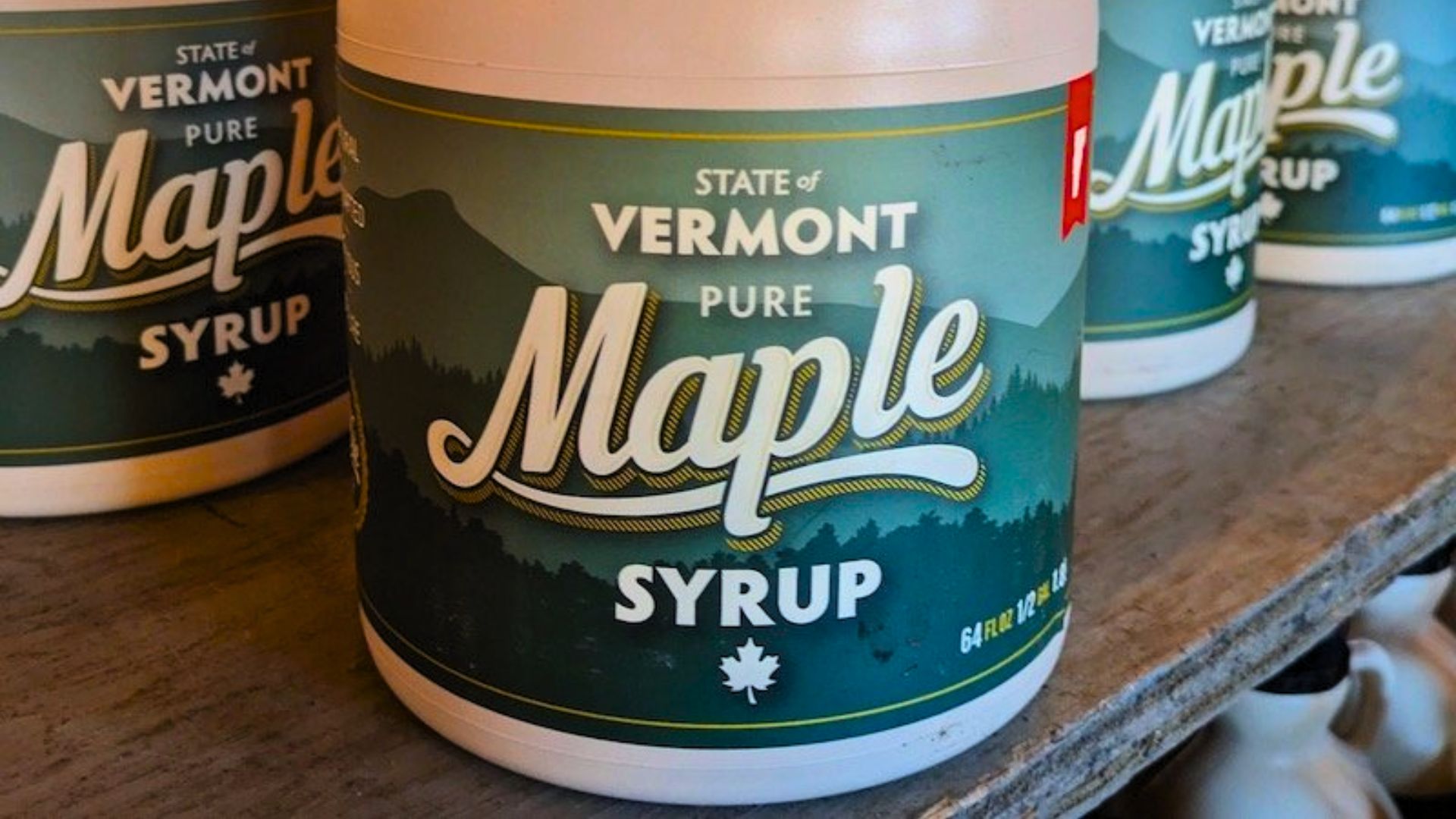
The most surprising thing about an old-fashioned Vermont farm shop may be what isn’t there. No cashier waiting behind a counter. No elaborate checkout lines. Just products from the farm, an arrangement for leaving payment and the quiet expectation that a visitor will take what they need and pay what they owe.
It sounds almost quaint until you remember that the people operating the farm depend on the money being there at the end of the day.
Near Dummerston, a family orchard has been associated with this practice for years. Its story includes apples, cider, maple syrup and something unexpected: even a serious theft did not convince the owner to abandon the honor system.

Credit: Dwight Miller & Son Orchards
Read also: 7 Dirt-cheap day trips in Arizona you will want to take this winter
That history turns a simple farm purchase into an interesting question about trust, community and the kind of rural business that survives by doing things differently.
The orchard with eight generations behind it
Dwight Miller & Son Orchards operates in the Dummerston area of southern Vermont. Regional agricultural listings identify its farm address as 511 Miller Road in East Dummerston. The family has described an eight-generation farming history, a remarkable span across which crops, equipment and customer habits have changed. What remains consistent is the connection between the land and the food sold from it.

Credit: Dwight Miller & Son Orchards
Read also: You might be surprised that one of America’s best pizza towns is this small Ohio city
The farm produces organic apples, seasonal fruit, apple cider and maple syrup. Those offerings make it a natural part of the region’s local-food landscape rather than a shop created solely to entertain visitors.
Harvest is work here. Apples must be picked and handled, cider is pressed and maple syrup depends on a brief stretch of suitable weather. A roadside sale is the final step in a much longer process.
The honor system has been part of the public story for at least a decade. News coverage in 2016 described a farm store left unlocked, with customers paying for eggs, meat, apples and syrup without a cashier.
Read also: This hidden Washington waterfall is just a ten-minute walk from the parking lot
The available material does not establish exactly when that practice began or confirm whether every current transaction is still handled in the same way. The history is real, but the present arrangement should be checked directly before a special trip.

Credit: Dwight Miller & Son Orchards
The theft that tested an old habit
In 2016, authorities reported the theft of more than 63 gallons of maple syrup from the Miller farm. It was not a minor incident involving one unpaid jar. News accounts described substantial losses and noted that the farm had experienced an earlier syrup theft as well. For most businesses, that would be enough reason to reconsider leaving valuable inventory accessible without a cashier.
Read also: 12 Michigan waterfront eateries worth a detour on your next summer drive
Read Miller, the owner quoted in contemporary reporting, said the incident would not end the family’s honor-system tradition. That response became a memorable example of rural trust persisting even after it had been abused.
It’s an unusually powerful detail because it avoids the need for an invented scene about friendly neighbors exchanging money at a wooden box. The documented statement already says plenty about the decision.

Credit: Dwight Miller & Son Orchards
Trust doesn’t mean assuming theft never happens. The 2016 case demonstrates exactly the opposite. It means choosing a system in which most customers are expected to behave honestly, while accepting that exceptions may occur.
Read also: Hungry drivers find biscuits and sausage gravy at this tiny Kentucky roadside kitchen
Farmers make practical calculations every day. Staffing a shop constantly can take time away from tending orchards or processing food. A self-service arrangement can keep products available without an employee stationed behind the counter for every sale.

Credit: Dwight Miller & Son Orchards
Maple season begins long before breakfast
Vermont maple syrup feels inseparable from pancakes and waffles, but its creation starts outdoors when winter is beginning to loosen its grip. Sugarmakers tap maple trees as conditions shift between freezing nights and warmer days. Those temperature changes encourage sap to move, producing a seasonal opportunity that can last only a limited part of the year.
Read also: This South Carolina island has no chain restaurants and that’s exactly why visitors love it
Fresh sap is thin and mostly water. It tastes nothing like the rich syrup that appears in a bottle. The liquid must be collected and then concentrated, traditionally by boiling in an evaporator until much of the water has been removed. A common rough estimate is forty gallons of sap for one gallon of syrup, though the actual ratio varies with the sap’s sugar content.
The work requires judgment. Temperatures change. A productive day may be followed by poor flow. Processing and filtering have to meet food-quality standards. Even with modern equipment, the producer still depends on the trees and the weather. Maple is a local food whose calendar can’t be entirely controlled by a business owner, which makes the finished product especially connected to place.
What makes pure maple taste different
Maple syrup isn’t one uniform flavor. Different grades offer varying degrees of color and intensity, from delicate golden syrup to darker, more robust versions. These differences are not simple rankings of good versus bad. A lighter syrup may be appealing when you want a subtle sweetness on breakfast. A darker version can stand up to baking, sauces or savory cooking where a gentle flavor might disappear.
The key word on a bottle is pure. Genuine maple syrup is made by concentrating maple sap, not by blending an imitation pancake syrup flavored to resemble it. Read labels carefully if authenticity matters to you. Farm-grown provenance and processing details are useful questions, especially when you are interested in supporting a specific producer rather than buying a generic regional souvenir.
At Dwight Miller & Son, maple syrup is one part of a broader agricultural business. That context makes a visit interesting even for people who already keep syrup in their kitchens. You can connect the bottle to a working farm rather than seeing it as another anonymous product on a grocery shelf.
Candy, cream and the many ways to enjoy maple
The supplied brief asks for maple treats, and it’s worth understanding the possibilities without claiming that every product is currently stocked at this particular farm. Maple candy is commonly made by cooking syrup to a higher concentration and controlling the cooling and stirring so that it crystallizes into a sweet confection. Maple cream, despite its name, can be made from pure maple syrup without dairy, developing a smooth, spreadable texture through careful preparation.
These foods reveal different sides of the same ingredient. Candy offers intense sweetness in small pieces. Maple cream spreads over toast or biscuits. Syrup remains the easiest choice for breakfast, but it also works in cooking where a modest amount of sweetness and maple flavor can add depth. Availability at the Dummerston farm should be confirmed; reliable public sources specifically support its syrup production, not a permanent menu of candy and cream.
That distinction needn’t make the outing less appealing. An orchard stand may have apples, cider, eggs or other seasonal foods even when a particular maple treat is unavailable. Exploring what’s actually produced and stocked is part of buying from a working farm. It is more honest—and often more interesting—than imagining an identical display waiting there every day of the year.
The appeal of an unlocked farm-shop door
A self-service store can feel more personal than a busy supermarket, even when no employee is in sight. The customer has to pay attention to prices and instructions. They must think about the people who made or grew the product rather than passing an item across a conveyor belt. The lack of a cashier is not a trick. It is a small invitation to take responsibility for the transaction.

Credit: Dwight Miller & Son Orchards
For a farm, it also solves a practical problem. The people growing apples and making syrup cannot always leave their work to stand behind a register. An unattended store allows customers to buy food while the producer continues harvesting, repairing equipment or preparing orders. The arrangement depends on trust, but it also depends on basic economics.
It is tempting to describe this as proof that everyone in Vermont is honest. That would be simplistic and contradicted by the documented theft. The more useful observation is that some producers still find enough value in the arrangement to maintain it. The system expresses a relationship with the community, not a claim that dishonest behavior has vanished.
There is a broader Vermont tradition here
Honor-system farm stands appear in various rural parts of Vermont. They may sell eggs, vegetables, flowers, fruit or maple products. Some accept cash through a box or slot. Others have introduced digital payment options, making the process easier for customers who no longer carry much cash. The details vary by farm and can change quickly.

Credit: Dwight Miller & Son Orchards
This means travelers should not assume that a single photograph tells the whole story. A stand that took cash only in 2016 might offer electronic payment now. Another may open only during the main harvest period. Some self-service locations are intended chiefly for local customers who already understand the instructions. Checking current details before driving several hours is simply good sense.
At Dwight Miller & Son, the historical reports describe an unlocked store and payment on trust. That is the verified foundation. Whether the same door remains unlocked in October 2026, and which payment methods are accepted, requires fresh confirmation from the operator. The business’s regional farmers-market listing provides a contact number: (802) 254-9635.
Apples make autumn another good season to look around
Maple sugaring is primarily a late-winter and spring activity. Apple harvest belongs to a different part of the calendar. For a farm that produces both, those seasonal rhythms create more than one reason to pay attention. The scent of apples and the sight of colorful southern Vermont hills can make an autumn outing appealing even when the sap isn’t running.
The farm has been associated with organic apples and cider as well as syrup. That gives visitors another way to appreciate its work. A bottle of syrup may be a year-round pantry item, while fresh apples reflect the immediate harvest. Buying both can turn a small stop into a useful introduction to two of Vermont’s best-known agricultural traditions.
Avoid assuming that every fruit variety is available throughout fall, or that public picking is offered on every date. Orchards have different arrangements for retail sales, picking and farm access. Ask what’s open to visitors before arriving. A working property is not automatically a public park, even when its products are sold directly to customers.
A cash box deserves a little planning
If the self-service operation is active during your visit, bring small bills and follow the posted instructions exactly. Don’t assume somebody will be available to make change. Don’t assume a card machine is hidden nearby. If electronic payment is allowed, the farm should be able to confirm that directly. The most respectful way to enjoy an honor-system shop is to make the transaction as straightforward as possible.
It also helps to decide what you need before opening containers or moving products around. Read labels, pay the correct amount and leave the shelves orderly for the next visitor. These are small courtesies, but the system works only when customers behave as though the farmer’s time matters. A low-tech shop isn’t an invitation to treat the place casually.
If you are purchasing maple syrup as a gift, keep the container upright and protected during the drive. Glass bottles can be surprisingly vulnerable among luggage. Ask about refrigeration or storage instructions for any perishable products. Pure syrup often requires refrigeration after opening, and other farm foods may have their own handling needs.
Why this is more than a nostalgic shopping story
It would be easy to make the farm sound like a relic frozen in a happier past. That misses the point. The business has persisted through real challenges, including theft, changing agricultural economics and the steady work of producing food. The honor system is interesting not because it proves that nothing has changed, but because it represents one decision about how to operate despite all those changes.
The family history provides substance. Eight generations on the land is a strong connection to place. The 2016 theft and the owner’s response give the trust story a documented human dimension. Maple production supplies the agricultural context, with real seasonal limits and processing demands that a visitor can appreciate even without watching sap boil.
What remains uncertain is important, too. Without current direct confirmation, a publication should not state that the cash box is waiting today or that the exact current payment setup has existed for decades. A headline can carry warmth and nostalgia, but its claims still need to match what can be established.
A little trust makes the sweetness last
Southern Vermont has plenty of beautiful roads, historic villages and places to admire autumn leaves. A small farm shop offers something different: the possibility of meeting the region through ordinary food and the people who produce it. Dwight Miller & Son Orchards has a long agricultural history, and its honor-system story is grounded in more than an attractive photograph.
Call before setting out, confirm the store’s current operation and see which maple and orchard products are available. If the self-service arrangement is still in place, follow the instructions and leave the correct payment. Then take your purchase home knowing it represents far more than sugar in a bottle. It carries a little of Vermont’s weather, work and an enduring willingness to give customers the benefit of the doubt.


