
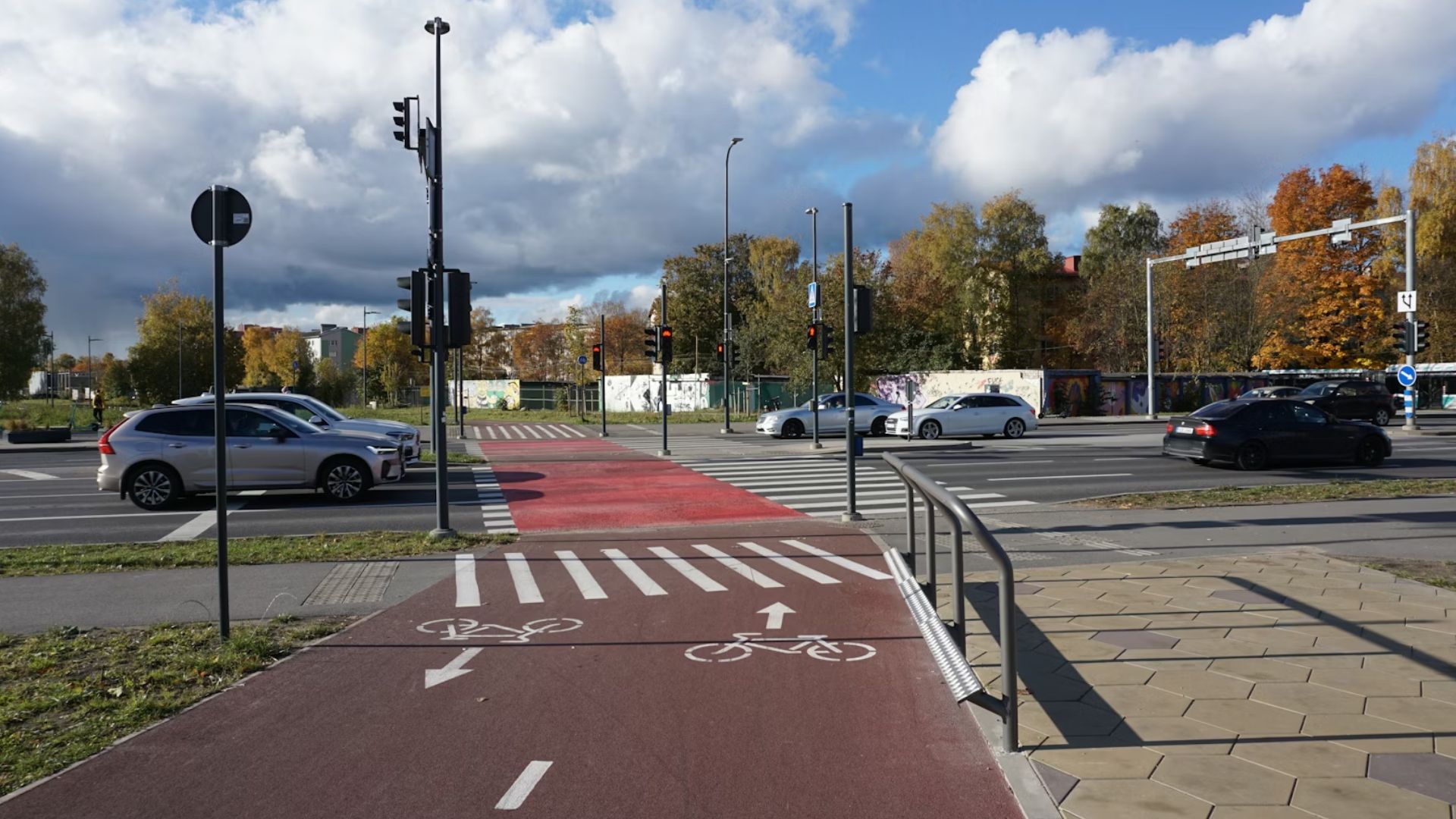
Bloomington, Indiana – The City of Bloomington is set to make a major push toward safer streets after receiving $1.44 million in federal funding aimed at reducing crashes and protecting people who travel by car, foot, bike, or mobility device. The award comes from the U.S. Department of Transportation’s Safe Streets for All Grant Program, a nationwide initiative designed to help communities prevent serious injuries and save lives on local roadways.
With a required 20 percent local match from the City, the federal award will support roughly $1.8 million in street safety projects over the next five years. City leaders say the funding arrives at a critical moment, as Bloomington continues to grow and traffic patterns become more complex across neighborhoods, commercial corridors, and school zones.
“Streets are some of the most shared public spaces we have and how they’re designed impacts all of us—whether we’re driving to work, walking our kids to school, biking to the Farmers’ Market, or crossing the street to a bus stop,” said Mayor Kerry Thomson. “This funding allows us to test solutions and act earlier.”
The grant builds on the City’s Safe Streets for All Action Plan, which Bloomington adopted in 2024. At the core of that plan is Vision Zero 2039, an ambitious but clear goal to eliminate all fatal and serious injury crashes on Bloomington roadways by the year 2039. Rather than focusing on enforcement alone, the plan emphasizes safer street design, data-driven decisions, and community input.
Read also: Hoosier Lottery launches new Gem 7s Scratch-offs giving players a chance to win up to $570,000
City officials say the new funding will support a mix of large-scale studies and smaller demonstration projects that can be adjusted based on real-world results. Planning and Transportation Director David Hittle described the grant as a flexible tool that allows Bloomington to move forward on several fronts at once.
“This funding will allow us to advance transportation projects both large and small—from full corridor studies to place-specific demonstration projects while strengthening connections across our city,” Hittle said. “It helps ensure our transportation system is safer, more accessible, and more equitable for residents, regardless of how they choose to travel.”
A significant portion of the funding, $1 million, has been set aside for corridor studies. These studies take a broad look at how streets function for everyone, not just drivers. They examine traffic speed, pedestrian crossings, access to businesses and neighborhoods, and how nearby land uses influence traffic patterns. The goal is to identify both immediate safety fixes and long-term design changes.
The City’s top priority for corridor study funding is South Walnut Street, stretching from Dodds Street to Gordon Pike. Officials identified this corridor as a medium- to high-priority area on Bloomington’s High Priority Network, reflecting a history of safety concerns and heavy use by multiple types of travelers. If funding remains after completing this study, the City may pursue similar analyses in other parts of Bloomington.
Another key component of the grant focuses on hardened centerlines at busy intersections. Hardened centerlines are physical or highly visible features placed in the center of intersections to slow down turning vehicles and make pedestrian crossings shorter and safer. They also help reduce confusion by clearly defining where vehicles should travel.
With $300,000 allocated for this effort, the City plans to design, install, and evaluate hardened centerlines at major intersections with high pedestrian activity. Officials believe these treatments could play an important role in reducing turning speeds and limiting the amount of time people are exposed to traffic while crossing the street.
The grant also includes $350,000 for traffic signal conversion demonstration projects. Bloomington maintains many traffic signals, some of which may no longer be appropriate for their current surroundings or may encourage higher vehicle speeds where slower travel would be safer.
Through this pilot program, the City will temporarily convert up to five existing signalized intersections into all-way stops, temporary single-lane roundabouts, or a combination of both. These short-term changes allow engineers and planners to gather safety data and hear feedback from residents before deciding whether permanent changes make sense.
In addition, $150,000 has been dedicated to creating a demonstration materials toolbox. This collection of materials will allow the City to quickly test new safety treatments or respond to serious crashes. Items from the toolbox can be used across multiple locations, giving Bloomington the ability to act proactively or reactively as conditions change.
City leaders say these investments reflect a broader shift toward using data and community input to guide transportation decisions. Rather than relying on one-size-fits-all solutions, the Safe Streets for All approach encourages cities to experiment, evaluate results, and adjust plans based on what works best locally.
Federal officials have promoted the SS4A program as a way to help communities take ownership of roadway safety, especially as traffic deaths remain a concern nationwide. For Bloomington, the funding represents both recognition of its planning efforts and a practical boost to move projects from paper to pavement.
As the projects roll out over the coming years, residents can expect to see temporary installations, new markings, and pilot designs appear on city streets. Officials say public feedback will play a key role in determining which ideas become permanent.
The City encourages residents to learn more about the Safe Streets for All Action Plan and how it shapes Bloomington’s transportation future. Additional information is available through the City’s website, where the full plan outlines priorities, goals, and strategies aimed at making every trip—no matter the mode—safer and more comfortable.
With federal support secured and a long-term vision in place, Bloomington officials say the work ahead is about steady progress. One corridor, one intersection, and one test project at a time, the City hopes to move closer to streets that truly serve everyone who uses them.


