
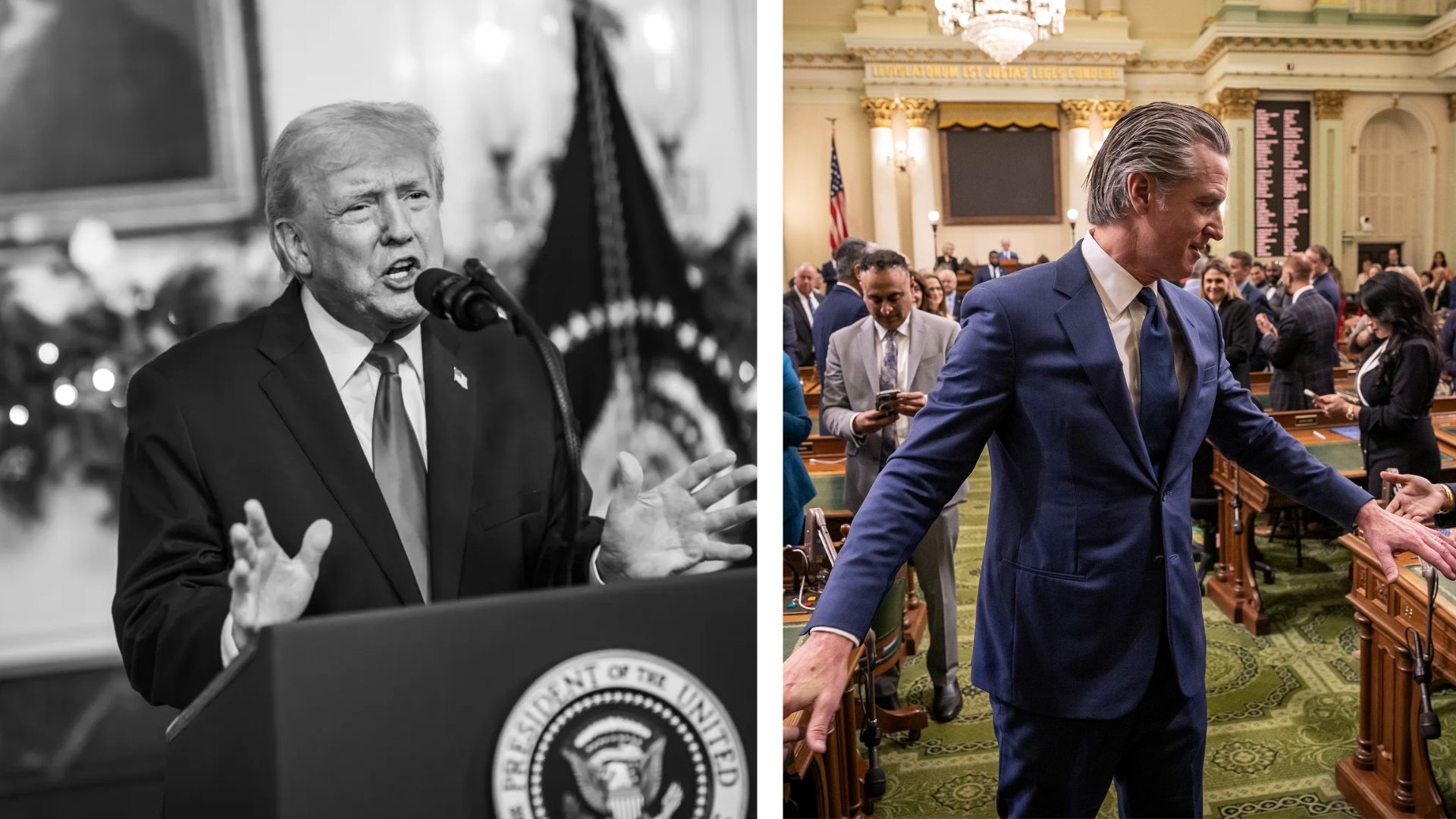
New York – Democratic leaders across the country, especially California, New York and Illinois governors, are calling for what they describe as a straightforward remedy to a costly policy fight: return the money.
In the wake of a Supreme Court decision striking down President Donald Trump’s sweeping tariff agenda, top Democrats say American households are owed compensation for years of higher prices tied to those import taxes. Their calculation is blunt. On average, they argue, each household paid roughly $1,700 more because of the tariffs. Now they want that money refunded.
The push gained momentum after the high court ruled that the administration’s tariff framework was unlawful. While the decision invalidated the policy, it did not spell out what should happen to the billions already collected. That unanswered question has opened a new political and legal battle.
New York Governor Kathy Hochul formally urged U.S. Treasury Secretary Scott Bessent to “refund all tariff payments to New Yorkers.” Illinois Governor JB Pritzker and California Governor Gavin Newsom voiced similar demands, pressing the federal government to make families whole. According to calculations cited by Democrats and reported by Axios, the total compensation owed runs into the billions, translating to about $1,700 per household nationwide.
In the Senate, Democrats introduced what they are calling the “Tariff Refund Act.” The proposal would direct U.S. Customs and Border Protection to issue reimbursements, prioritizing small businesses that paid import duties upfront. Lawmakers backing the measure say smaller firms were often hit hardest, lacking the margins to absorb sudden cost spikes.
Senator Elizabeth Warren of Massachusetts has become one of the most visible advocates for the refund effort. In a recent video message, she recounted hearing from business owners in her state — including board game makers and baby stroller manufacturers — who said tariffs drove up operating costs and forced them to increase prices.
“Back in Massachusetts, I heard from all sorts of companies, from board game makers to baby stroller manufacturers, that tariffs made it more expensive to run their businesses and forced them to raise their prices,” she said.
“The truth is that you paid for Trump’s disastrous economic policies,” Warren said, arguing that the burden ultimately landed on consumers.
New York Governor Hochul cited a January study from a university budget lab to support the $1,700 figure. The research concluded that tariffs enacted for 2025–26 led to a 1.3% short-term rise in consumer prices. It estimated that, assuming costs were fully passed on, the average household experienced an income loss of approximately $1,751 in 2025 dollars.
“On behalf of over 20 million New Yorkers, I demand the Trump Administration refund approximately $1,751 for every New York household, for a total tariff refund of approximately $13.5 billion to New Yorkers. To that end, I am calling on the Department of the Treasury to coordinate with appropriate agencies and immediately formulate and implement a plan to refund all tariff proceeds,” Hochul said.
Additional analyses paint a similar picture. A recent report from a major financial institution found that nearly 90% of the economic burden of the tariffs fell on U.S. companies and consumers. Another study published in October by a global financial analytics firm estimated that businesses absorbed more than $1.2 trillion in tariff-related costs in 2025, with at least two-thirds of those expenses passed through to Americans in the form of higher prices.
Despite the political momentum, the path to refunds is far from simple. The Supreme Court ruling invalidated the tariff program but did not outline a repayment mechanism. Justice Brett Kavanaugh, in dissent, underscored the uncertainty surrounding how previously collected funds should be handled.
Economists and trade lawyers say the refund process could take months, if not longer. Some estimate it may stretch up to 18 months as cases wind through federal courts. One international trade attorney suggested that importers would likely need to recover payments first, after which they could reimburse downstream customers — a multi-step process with no clear timeline.
Several major corporations, including Costco, FedEx, and L’Oreal, have already filed lawsuits seeking repayment of tariffs they paid under the invalidated policy. Their cases could shape how — and how quickly — any broader refund effort unfolds.
Meanwhile, the administration has responded by implementing new 15% global levies and is reportedly exploring legal strategies to preserve existing tariff revenue despite the court’s ruling. That move has only intensified Democratic criticism.
For now, the $1,700 figure has become both a political rallying cry and a symbol of a broader economic debate. Democrats say it represents money taken from families’ pockets. Whether those dollars will ever be returned remains an open question — one that could define the next chapter of the tariff fight.


