
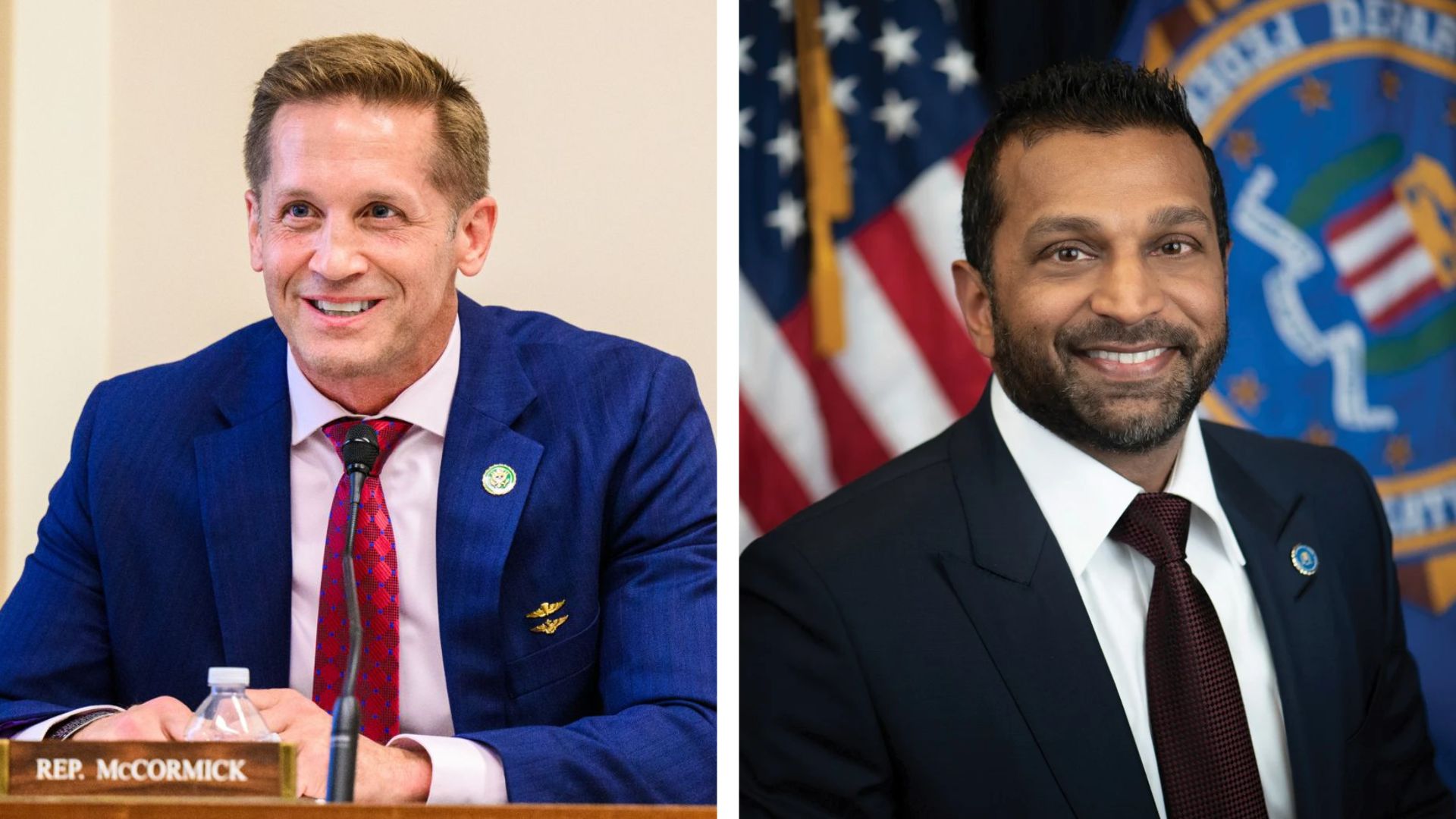
Washington, D.C. – A fresh political fight erupted on Capitol Hill this week as Georgia Rep. Rich McCormick moved to defend FBI Director Kash Patel against allegations that have triggered a fierce public dispute, a denial campaign from the administration, and now a massive defamation lawsuit.
The controversy, fueled by a recent report from The Atlantic and amplified by questions from MeidasTouch reporter Pablo Manríquez, has quickly grown into something larger than a clash over one article. It now sits at the intersection of credibility, media accountability, public conduct, and the standards applied to one of the country’s most powerful law enforcement posts.
At the center of the dispute is a report published by The Atlantic that cited more than two dozen anonymous witnesses and alleged Patel had engaged in “excessive drinking,” displayed “conspicuous inebriation,” and had periods of “unexplained absences.”
Those claims were not accepted quietly. Patel, along with the FBI, the Justice Department, and the White House, denied the accusations, framing them as unproven and politically charged. By Monday, the conflict had escalated even further when Patel filed a $250 million defamation lawsuit against the publication.
According to Patel’s legal team, the article was “obviously fabricated” and “designed to destroy Director Patel’s reputation and drive him from office.”
That language made clear the stakes Patel sees in the fight. This is no longer merely a story about anonymous sourcing and disputed personal behavior. It is also a direct legal assault on a major media outlet, one that could force a broader reckoning over how explosive allegations about public officials are reported, sourced, and defended.
One of the details that drew particular attention involved Patel allegedly chugging a beer in the U.S. men’s hockey team locker room after its Olympic gold medal win. The report said President Donald Trump shared his dismay over that moment.
Even so, that episode became a flashpoint not because it was independently established as wrongdoing, but because it sharpened the debate over where the line is drawn between private conduct and public responsibility.
That question was put directly to McCormick when Manríquez approached him on Capitol Hill and asked whether Patel’s drinking was a national security concern. McCormick did not endorse the allegations themselves. Instead, he made clear that he was not persuaded they amounted to a meaningful issue.
“I don’t know anything about his drinking,” McCormick said. “I’ve not heard any rumors or heard any concerns. I think he’s executing his job brilliantly up to this point, so I don’t see why that would be a controversial thing.”
As the questioning continued, McCormick widened his defense, shifting the conversation away from the specific claims in The Atlantic report and toward a more general view of personal freedom and off-duty behavior.
When pressed about the account involving the Olympics, he argued that what people do in “their spare time” should remain “their business.”
“So, I’ll tell you as a [inaudible] Marine, I’ve seen plenty of guys drink and have fun,” he said.
“When they are on their spare time, that’s their business. I bet you there are a lot of Americans out there who take offense to that: Does that mean I can’t go party with my friends and then go do my job during the week time? I don’t think that’s really fair. As long as it doesn’t affect his job in a negative way, I’m cool.”
He then added a more personal reflection, tying his defense of Patel to his own past experiences.
“I’ll tell you, when I was with my rugby buddies back in the day, on occasion I’d like to go out and have fun with those guys and let my hair down and be one of the guys,” McCormick said. “I think there’s nothing wrong with that.”
Those remarks instantly reframed the controversy.
Rather than engage the anonymous allegations point by point, McCormick chose to defend the broader principle that a public official should not be judged solely for social drinking unless it can be shown to interfere with official duties.
That argument may resonate with supporters who see the accusations as overreach, but it also leaves unresolved the core dispute: whether the conduct described was harmless private behavior or something more serious.
For now, that question remains unsettled. The Atlantic’s claims are under dispute, not established fact, as also reflected in coverage from Reuters and AP. What is clear is that Patel’s allies are not retreating. They are contesting the story in public, in political messaging, and now in court.
And as that legal battle unfolds, the fallout could extend well beyond Patel himself, shaping both his standing in office and the broader fight over how far allegations, anonymous sourcing, and reputational damage can go before the courts step in.


