
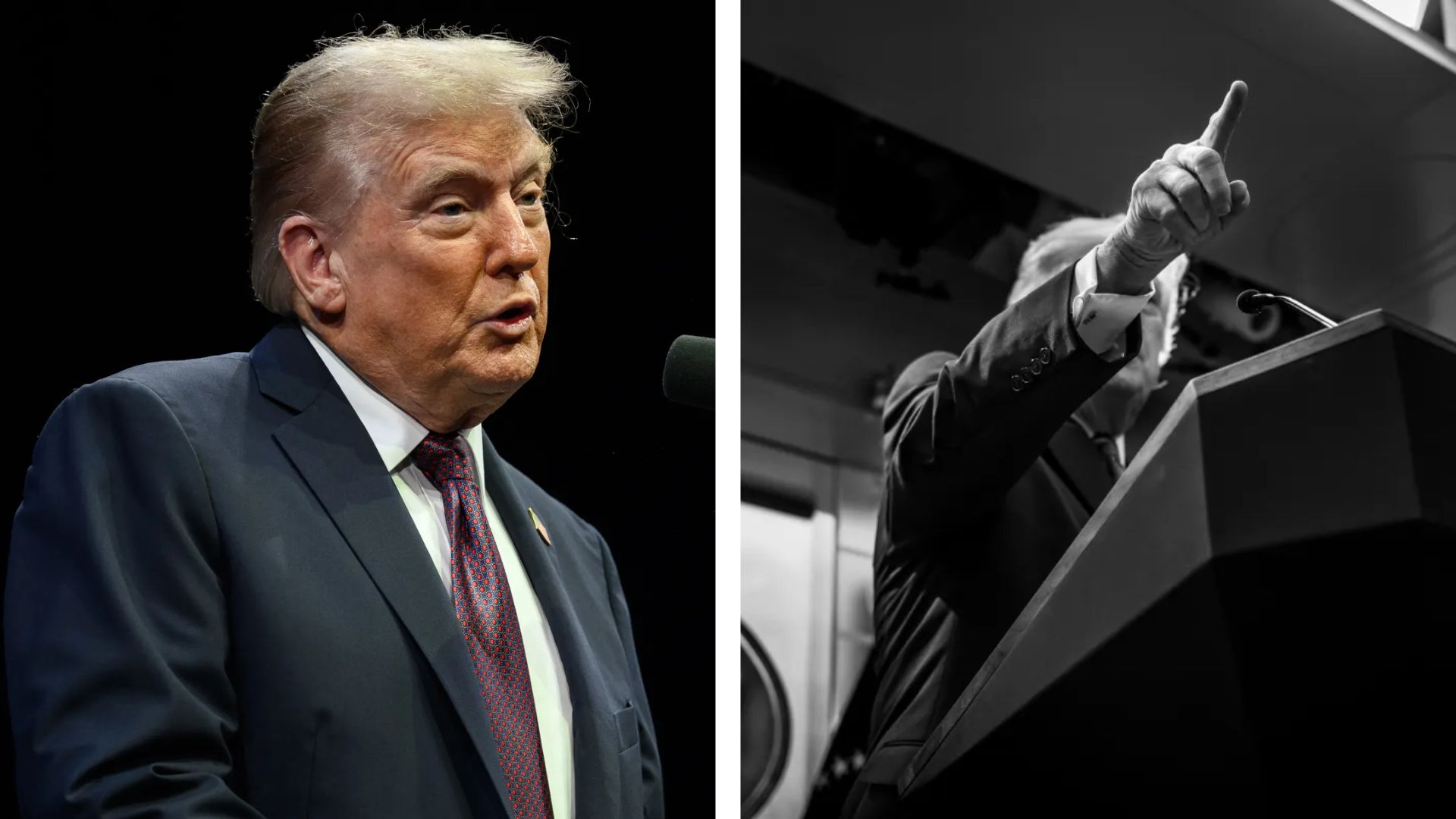
From California to New York, and from Florida to Texas, conversations across the country have centered on a single development: the U.S. Supreme Court’s decision last week to strike down former President Donald Trump’s tariffs. The ruling quickly became one of the most discussed national issues, dominating cable news panels, political talk shows, business forums, and social media feeds.
A sharply divided Supreme Court handed a big blow to President Donald Trump’s trade agenda by deciding 6–3 that he was not allowed to utilize emergency powers to impose tariffs.
The ruling goes against the legal basis for a tariff system that has shaped the administration’s economic policy since April 2025 and makes it much harder for the president to negotiate with other countries.
The case was mostly on Trump’s use of the International Emergency Economic Powers Act (IEEPA). The government used the law to justify tariffs on most of the U.S.’s trading partners, saying they were a response to what it called a “balance of payments emergency.”
There were also separate, targeted tariffs on Canada, China, and Mexico because of a “drug trafficking emergency.” The Court decided that the IEEPA did not allow tariffs in these situations, which effectively destroyed the legal framework that supported much of the policy.
The money at stake is huge. According to Paul Ashworth, Capital Economics’ top North America analyst, customs duties have brought in almost $240 billion for the U.S. Treasury since the president called it “Liberation Day” in April 2025.
That number is $180 billion more than it was at the same time last year. Ashworth figured out that the effective tariff rate went raised from 2% to about 14% based on the weights of imports in 2024. Nine of those 12 criteria were directly related to the IEEPA tariffs, which are no longer in effect.
The government might have to pay back roughly $120 billion in claims, which is about 0.5% of the U.S. gross domestic product, if those tariffs are struck down. The majority of the Court did not say how repayments should be made.
Justice Brett Kavanaugh, who disagreed, pointed out the practical problem by saying that the judgment did not say “whether, and if so how, the government should go about returning the billions of dollars.” He warned that the process would probably be a “mess.”
In addition to the immediate financial effects, the verdict makes it harder for the president to negotiate. Ashworth said that the administration might turn to Section 122 of the Trade Act of 1974, which lets them put temporary tariffs on goods to fix “large and serious” balance of payments deficits.
But that power is quite limited. Tariffs under Section 122 can only be 15% at most, last for 150 days unless Congress extends them, and must be fair, which means that all trading partners pay the same rate. That architecture would not allow for the flexible, partner-specific structure that Trump used.
“Trump will no longer be able to honor many of the ‘deals’ he has negotiated” with individual nations, Ashworth said to Fortune, pointing to the loss of tailored tariff threats as a critical blow.
There don’t seem to be many other legal options. Ashworth says that judges would probably decide that the more specific parts of the 1974 Trade Act take precedence over Section 338 of the 1930 Smoot-Hawley Tariff Act, which enables tariffs of up to 50% against countries that discriminate.
The government might potentially use well-known mechanisms like Sections 201 and 301 of the 1974 Trade Act or Section 232 of the Trade Expansion Act of 1962. But those methods need thorough investigations and measures to be taken, which is very different from the quick, one-sided acts that were part of the IEEPA-based plan.
The political environment adds to the uncertainty as the midterm elections get closer. It would be hard to get Congress to agree to new tariffs since the legislative environment is so unpredictable. The Supreme Court’s decision has changed the limits of presidential power over trade in a significant manner. It has stopped a policy that had changed America’s tariff system in less than a year.


