
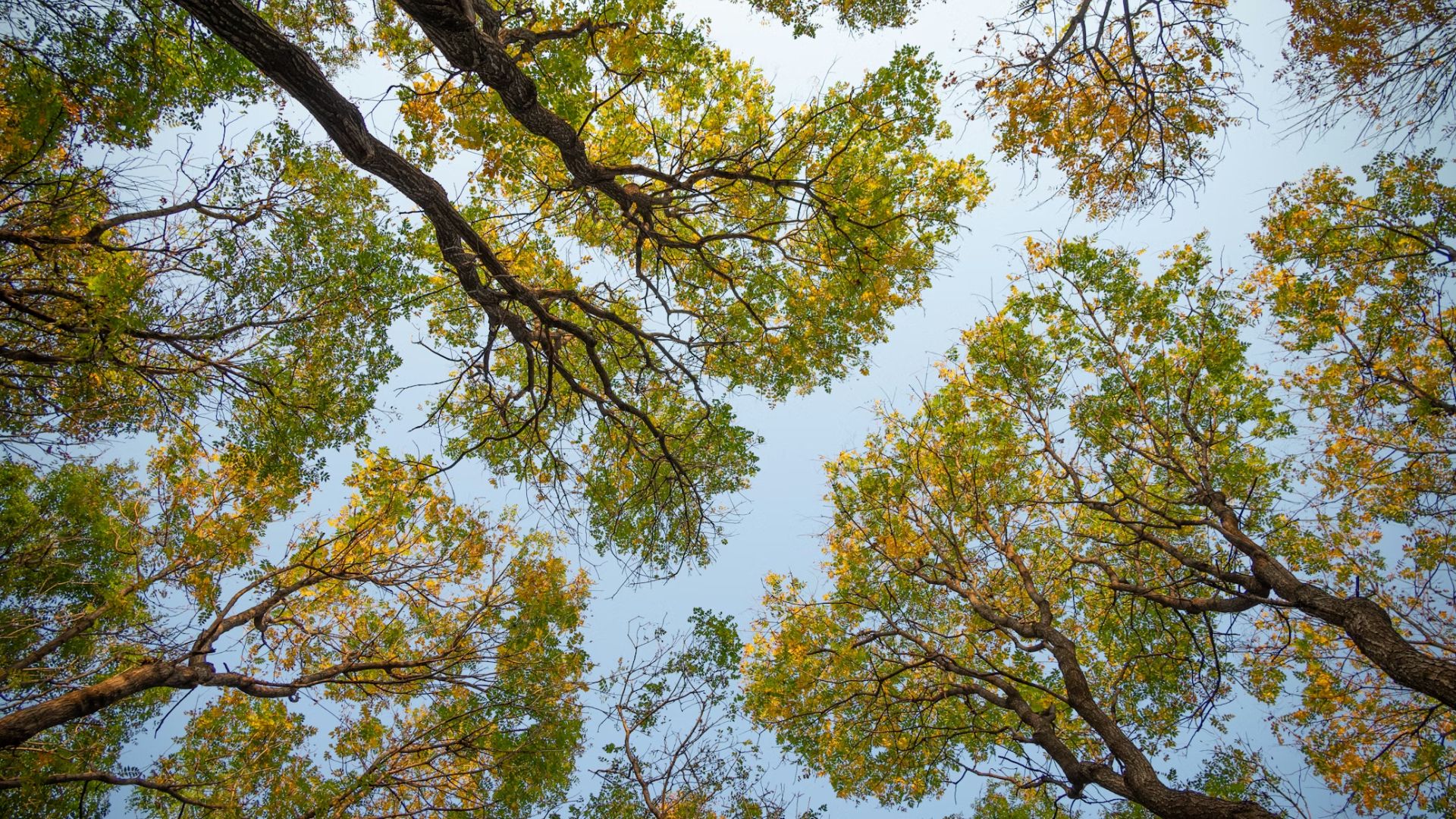
Bloomington, Indiana – Bloomington is steadily building a stronger urban forest, pairing long-term planning with practical work on the ground as the city invests in planting, maintenance and storm preparedness.
That effort is unfolding across streets, rights-of-way and public parks, where the city’s urban forestry program now oversees more than 24,000 publicly owned trees.
Housed within the Parks and Recreation Department, the program has become a central part of Bloomington’s broader strategy to make neighborhoods safer, cooler and more resilient.
Read also: Bloomington expands inclusion with detailed access guides for 20 everyday destinations
A major boost arrived in November 2023, when Bloomington secured a $100,000 Inflation Reduction Act grant through the U.S. Department of Agriculture Forest Service’s Urban and Community Forestry Program, administered by American Forests’ Catalyst Fund.
Paid out in $25,000 installments over four years, the grant effectively doubled the city’s budget for proactive storm-resilience pruning. Rather than waiting for branches to break during major weather events, the work is designed to identify and remove weak or hazardous limbs before they can cause damage.
That approach is already moving from plan to practice. Phase I of the Storm Resilience Pruning Project was completed in March 2026 by Bluestone Tree and covered about 50 trees. On March 23, 2026, the Board of Park Commissioners approved a second $25,000 contract with the same company for Phase II, which is expected to cover another 50 trees.
The first two phases focused on priority routes across the city, including areas with heavy pedestrian and vehicle traffic, overhead utility lines, mature tree cover and locations where low canopy coverage has historically left neighborhoods underserved.
City officials say this kind of early intervention can lower cleanup costs after storms while also improving day-to-day public safety. It also fits into a larger equity-minded approach, with tree work and future planting guided not only by risk, but by who benefits from shade, cleaner air and greener public space.
Bloomington is also continuing a slower but important transition away from invasive Callery pear trees. Now in the fourth year of a 15-year removal plan, the city has already reduced the number of those trees significantly.
A 2022 inventory counted 1,251 Callery pears in parks and rights-of-way, and about 950 remain today. Staff expect to remove 80 to 120 each year and replace them with native species.
At the same time, the city’s planting campaign continues to expand. Funding approved through Bicentennial Bond projects in 2018 set aside $800,000 for street and rights-of-way planting, helping Bloomington add about 2,500 trees so far.
Read also: More Bloomington voices are now invited into city survey as broader public phase begins
Another 200 are scheduled to go in this fall, with planting sites selected using factors such as bus stop activity, pedestrian traffic, heat index data and site readiness. Separate from that work, 157 trees were planted in 2024 to replace removals tied to Duke Energy’s Bloomington Reliability Project, with the utility contributing more than $55,000.
Taken together, the city’s tree strategy is shaping more than the landscape. It is also reinforcing Bloomington’s effort to create cooler neighborhoods, cleaner air and water, and a safer public realm as extreme weather and urban heat become more pressing concerns.


