
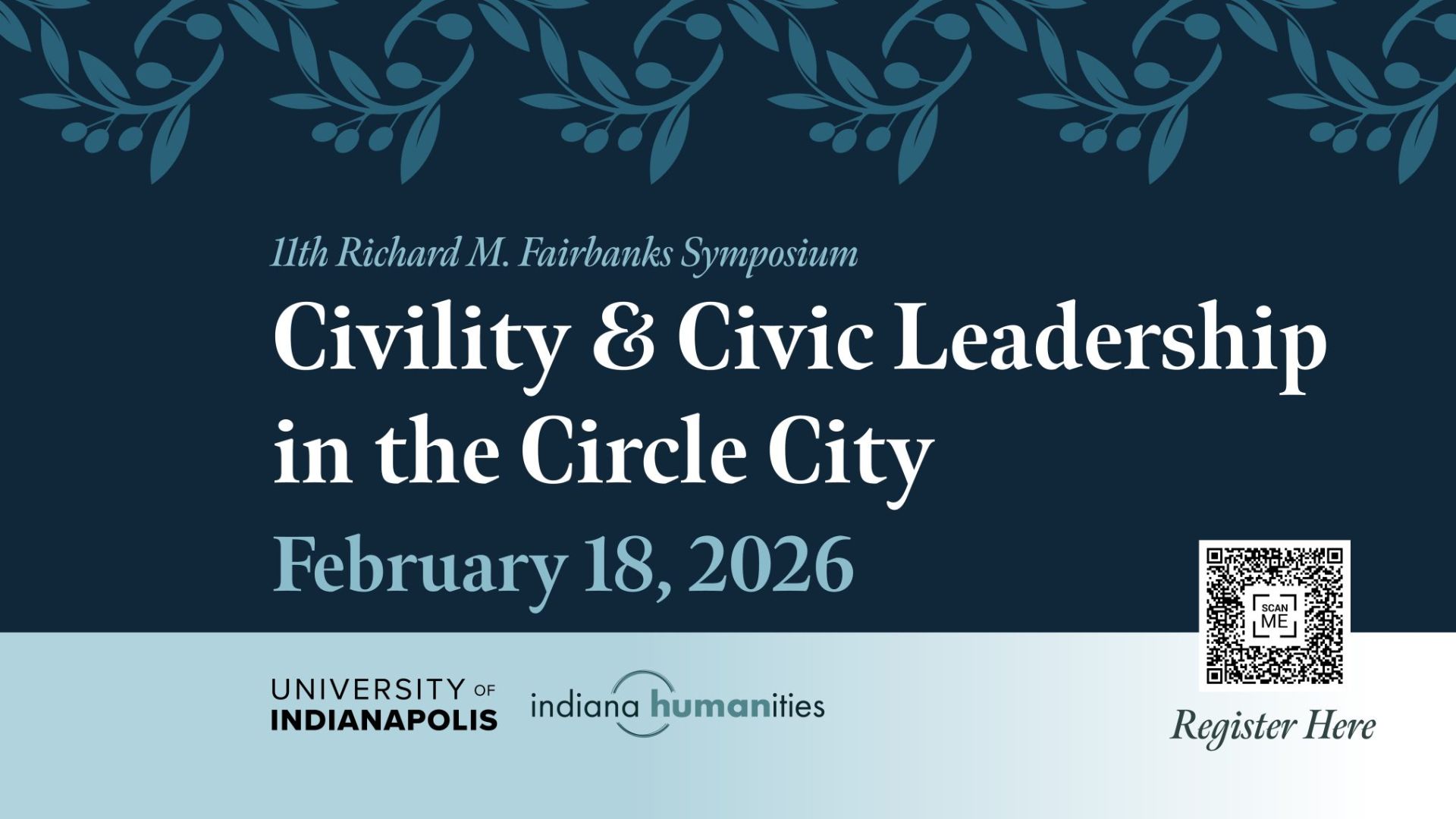
Indianapolis, Indiana – At a moment when political divisions dominate headlines and public debates often feel sharp and strained, a major event in Indianapolis is preparing to tackle a simple but powerful idea—civility. The University of Indianapolis, in partnership with Indiana Humanities, will host the 11th annual Richard M. Fairbanks Symposium on Feb. 18, bringing together scholars, civic leaders, and community members to explore how respectful dialogue and thoughtful leadership can help strengthen communities.
This year’s symposium arrives at a time when concerns about political rhetoric are especially high across the United States. According to a Gallup poll released in December, overwhelming majorities of Americans believe that public discourse has grown increasingly inflammatory. The survey found that 94% of Democrats and 93% of Republicans think the opposing party has gone too far in its rhetoric. At the same time, far fewer respondents were willing to say the same about their own side, with just 36% of Republicans and 28% of Democrats acknowledging excessive rhetoric within their own party.
Organizers say these numbers highlight the urgency of creating spaces where people can talk openly, listen carefully, and rebuild trust. For them, the symposium is not simply an academic gathering but an opportunity to encourage meaningful conversations about civic life.
“At a time when almost all discourse in the public square feels fractured and increasingly polarized, opportunities for everyone to come together for thoughtful conversation are more important than ever,” said Keira Amstutz, president and CEO of Indiana Humanities. “We hope to provide tools that can spark change. By focusing on civility, we hope to encourage people to engage despite their differences in ways that strengthen our city and state.”
The event’s theme centers on the idea that civility is not merely about being polite or avoiding disagreement. Instead, it is about fostering understanding and building stronger connections, even when opinions differ sharply. Organizers believe this approach can help civic leaders navigate complex challenges while also inspiring everyday citizens to participate more actively in public life.
The symposium will feature a full schedule of discussions designed to examine civility from multiple perspectives. The day will begin with a panel that explores the concept from both theoretical and historical viewpoints. This session will look at how ideas about civil discourse have evolved over time and why they remain essential in democratic societies.
A second panel will shift the focus to present-day Indiana, examining findings from the state’s new civic health index. This discussion is expected to explore what the data reveals about community engagement, public trust, and the broader challenges facing civic life in the region.
The event will also include a keynote conversation featuring two prominent voices in the national civility movement. Alexandra Hudson, a widely recognized author and founder of Civic Renaissance, will join Carmel City Councilman Jeff Worrell for a dialogue on how civility can be translated into practical action.
Hudson’s book, “The Soul of Civility: Timeless Principles to Heal Society and Ourselves,” has become a key reference point for civic engagement initiatives across the country. Its ideas have inspired partnerships and programs aimed at improving dialogue within communities. Her collaboration with Worrell helped launch Project Civility and the National Civility Summit, which has brought together mayors, members of Congress, and other leaders to discuss ways to apply these principles locally.
“Civility is not politeness or agreement, and it is not about smoothing over conflict,” said Hudson. “Civility is the practice of seeing the humanity and personhood of the other, especially when disagreement is real. In a divided time, I am grateful to partners like the Fairbanks Foundation, the University of Indianapolis and Indiana Humanities who are creating space for serious, public reflection on these questions. Each of us has more power than we realize to shape the civic life of our communities and it is an honor to work alongside local leaders here in Indianapolis and beyond as they build institutions and initiatives grounded in these ideas.”
For organizers at the University of Indianapolis, the topic also carries historical significance. Faculty members note that the current focus on messaging and communication represents a unique moment in modern political life.
“As a historian, it strikes me that we have not seen this much focus on messages, messaging and how people express themselves in my own lifetime,” said Ted Frantz, chair of the University of Indianapolis History Department and one of the event organizers. “For just about anyone who has graduated from college after 1975, this raises fundamental questions about communication and civic responsibility. How we answer these questions has profound implications for us all.”
The symposium will run from 9:30 a.m. to 2:30 p.m. at UIndy Hall inside the Schwitzer Student Center. Along with panel discussions and the keynote conversation, the program includes a lunch period, which will provide additional opportunities for networking and informal dialogue.
Parking will be available near the student center, and organizers encourage attendees to register in advance. Media representatives will also have opportunities to conduct interviews, particularly during the lunch portion of the event.
Beyond the day’s discussions, organizers hope the symposium will have lasting impact. They envision it as a starting point for continued reflection and action, both within Indianapolis and across Indiana. By encouraging participants to consider how they communicate, collaborate, and lead, they aim to inspire practical steps toward a more constructive civic culture.
At a time when political tensions remain high nationwide, the Fairbanks Symposium seeks to offer something increasingly rare—a space for calm conversation, careful listening, and shared exploration of common ground.


