
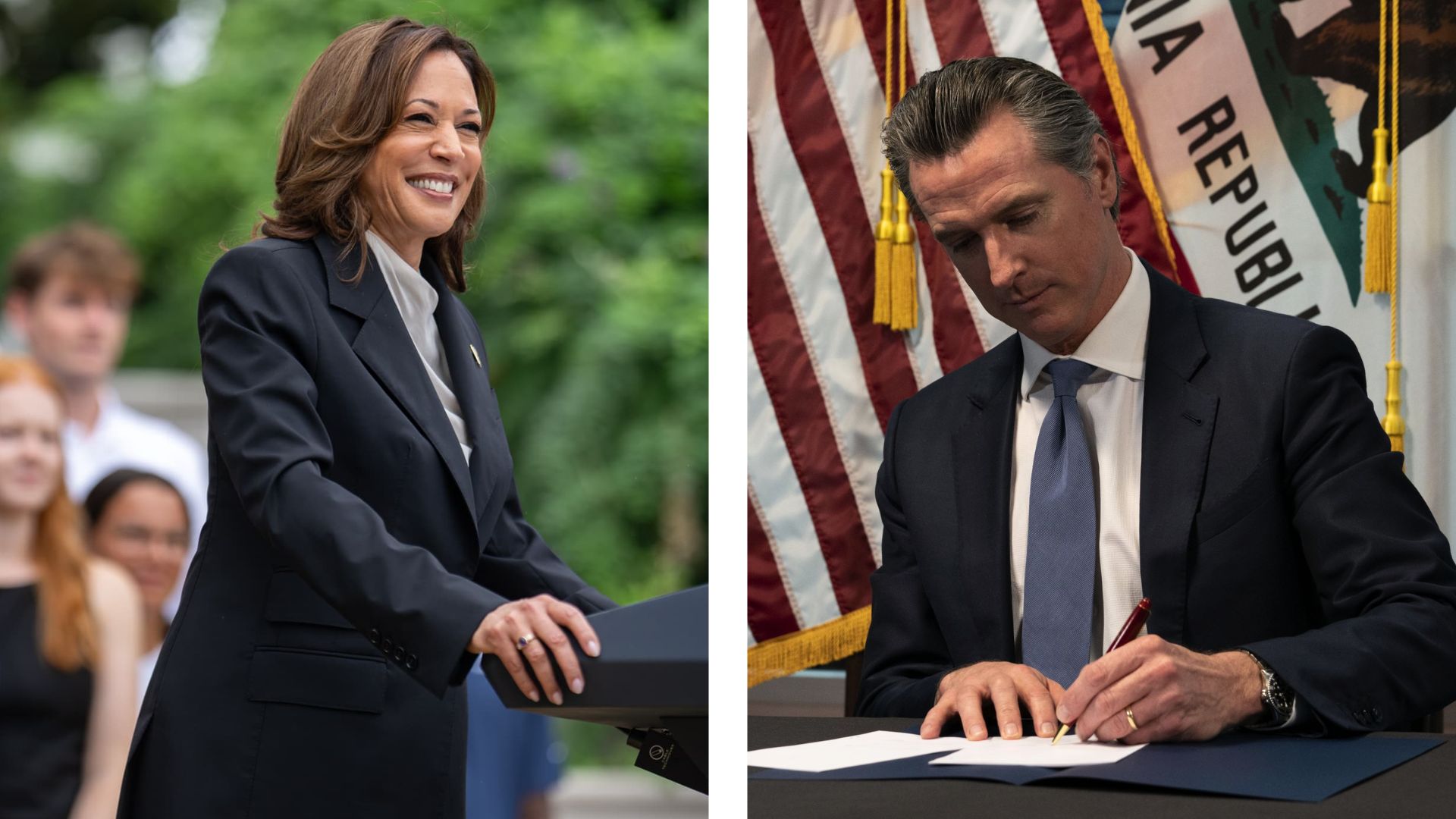
California – A newly released national survey is sending a sobering signal through Democratic circles, raising fresh questions about the political standing of two of the party’s most recognizable figures, California Governor Gavin Newsom and former Vice President Kamala Harris.
The NBC News poll, based on interviews with 1,000 registered voters, suggests that both leaders are currently facing unfavorable public perception across the broader electorate. According to the survey, only 27 percent of respondents said they hold a positive view of Newsom.
This is while 45 percent expressed a negative opinion of the California governor. Harris also registered more negative than positive sentiment, with 51 percent viewing her unfavorably compared to 34 percent who reported a positive impression.
The findings arrive at a moment when speculation continues to swirl around potential Democratic contenders for the 2028 presidential race. Both Newsom and Harris are widely considered prominent figures who could emerge as leading voices for the party in the years ahead. Yet the poll numbers suggest that their national images may face challenges as the next presidential cycle slowly comes into view.
Despite her broader unfavorable rating among general voters, Harris appears to maintain stronger support inside her own party. When Democratic voters were asked whether they prefer a candidate closely aligned with party principles or someone viewed as more electable in a general election, Harris emerged as the preferred choice.
In that survey group, 67 percent of Democrats reported a positive view of Harris, compared with 52 percent who expressed favorable opinions of Newsom.
The results underscore a complicated political dynamic: while Harris appears to enjoy stronger enthusiasm among Democratic primary voters, both she and Newsom face skepticism among the wider electorate.
Neither figure has formally declared a future presidential campaign, though both have left the door open to the possibility. Harris has publicly hinted that her political ambitions remain alive. She already acknowledged that a future White House run is something she “might” consider.
Newsom, meanwhile, has also acknowledged the conversation surrounding a potential presidential bid but has emphasized that any decision would involve his family. In a recent interview with CNN, the governor described a candid moment with one of his children while discussing the idea of seeking the presidency.
“My son … it was very powerful, texted me a few months ago when there was some headline that suggested that I made some decision, and he goes, ‘Dad, are you running (for) president?” Newsom said to CNN.
He continued, “I said, no, we’ll make this decision as a family. And he goes, you can’t. And I said, why? He goes, ‘I’m too young. You need to spend more time with us.’
“I mean, how do you deal with that one?” he said.
While political speculation continues, Newsom has also remained active in national policy debates. Most recently, he joined a growing group of Democratic leaders calling for Americans to receive refunds tied to import tariffs that were later struck down by the U.S. Supreme Court.
The ruling invalidated a broad tariff framework introduced during former President Donald Trump’s administration. Although the decision overturned the policy, it left unresolved what should happen to the billions of dollars collected under the tariffs.
Democratic leaders argue the answer should be straightforward: return the money to American households. Their estimate suggests families paid roughly $1,700 more on average because of higher costs linked to the tariffs.
Newsom joined governors from states including New York and Illinois in pressing federal officials to issue refunds. New York Governor Kathy Hochul formally asked U.S. Treasury Secretary Scott Bessent to reimburse residents for the tariff payments, while Illinois Governor JB Pritzker voiced similar support.
In Washington, Senate Democrats have introduced legislation known as the “Tariff Refund Act,” which would direct U.S. Customs and Border Protection to distribute reimbursements. The proposal prioritizes small businesses that paid import duties directly, many of which lawmakers say struggled to absorb the sudden cost increases.
Senator Elizabeth Warren has also become a vocal advocate for the effort, describing conversations with business owners who say the tariffs forced them to raise prices or absorb steep financial losses.
For now, the debate over refunds remains unresolved. But as economic arguments collide with shifting political fortunes, the latest polling numbers serve as a stark reminder that even some of the Democratic Party’s most visible figures are navigating uncertain terrain ahead of the next presidential era.


