
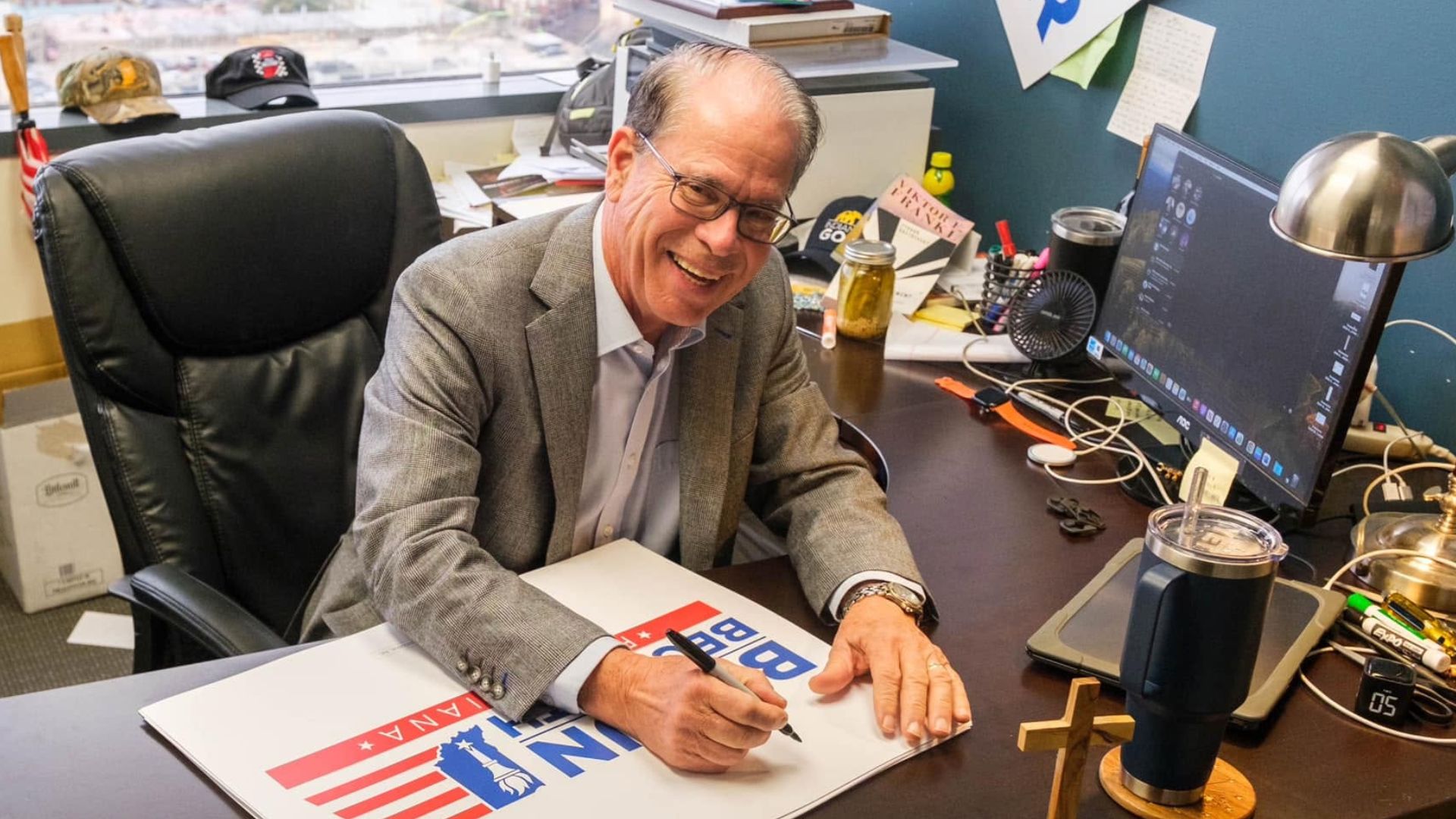
Indianapolis, Indiana – A governor can announce a reelection campaign and face an uncomfortable number on the same day. For Mike Braun, that number is 35%.
That is his job approval rating in a new Indiana Chamber of Commerce poll, shared Nov. 16 as Braun launched his bid for a second term in 2028.
The rating is lower than any recorded for his three immediate predecessors in the Chamber’s comparison covering roughly two decades. Braun’s response is to make the cost of living the focus of the campaign, the very issue voters placed at the top of the poll.

Cygnal Research surveyed 600 likely Indiana voters on Oct. 13 and 14, using text messages, phone calls and online responses. The margin of error is plus or minus four percentage points. The survey was taken before an election in which Republicans lost two statewide offices, five state Senate seats and 16 state House seats. The House losses ended their supermajority, though they kept control of both chambers.
Braun’s rating falls below the low points cited for former Republican governors Mitch Daniels, Mike Pence and Eric Holcomb. Pence came closest at 36% in 2015, the year Indiana’s Religious Freedom Restoration Act drew national criticism. Daniels’ ratings ranged from 48% to 61% in the Chamber’s comparison, Pence’s from 36% to 54%, and Holcomb’s reached a low of 49%.
There is a qualification to the decades-long comparison: Braun himself registered 34% approval in the Chamber’s 2025 data. This year’s figure is one point higher. The difference between his current 35% and Pence’s 36% is also smaller than the poll’s margin of error.

Credit: Mike Braun’s official website
Read also: Indiana woman sold proof of asbestos training her customers never received
The survey found dissatisfaction extending beyond the governor’s office. A year ago, voters who thought Indiana was on the right track outnumbered those who thought it was on the wrong track by two percentage points. Now the wrong-track group leads by 13 points, with 51% saying the state is headed in the wrong direction.
President Donald Trump’s numbers shifted, too. His approval exceeded disapproval among Indiana likely voters by six points last year; now his disapproval exceeds approval by eight points. The Chamber’s figures also show approval of the General Assembly dropping from 55% in 2019 to 24% in 2025.
Asked for their top priority, 44% of voters chose inflation and the cost of living. The next most common answer, taxes and government spending, drew 12%. At the Chamber’s legislative preview, leaders of both parties agreed that affordability would be a focus of the coming session.
Braun made a similar case at his Nov. 16 campaign fundraiser. He said his administration had delivered $1.5 billion in property tax savings, worked to hold down energy rate increases, expanded child care access and helped lower gas prices. Those are the results he wants voters to weigh against their own household bills.
“But I know too many Hoosiers are still struggling to make ends meet,” Braun said in a statement. He said he is running to build on what his administration has done and deliver more savings. He also announced plans to visit all 92 counties on an affordability tour.
Braun will not be on the ballot until 2028. His campaign has begun, however, with a clear test already in view: whether voters feel the relief he is promising before they are asked to give him four more years.


