
Indiana – Indiana is moving toward a major shift in who oversees one of the state’s largest industrial waste problems. With more than 100 coal ash disposal units potentially needing permits, decisions now handled at the federal level could soon land largely in the hands of state regulators.
The change is not final, but Indiana took a significant step Tuesday, Sept. 15, when the U.S. Environmental Protection Agency proposed approving the state’s application to operate its own Coal Combustion Residuals permitting program. EPA says Indiana has more CCR units than any other state.
If approved, the Indiana Department of Environmental Management would issue permits governing coal ash disposal in landfills and surface impoundments instead of the federal government. Coal combustion residuals, or CCR, are materials left behind when coal is burned to generate electricity.

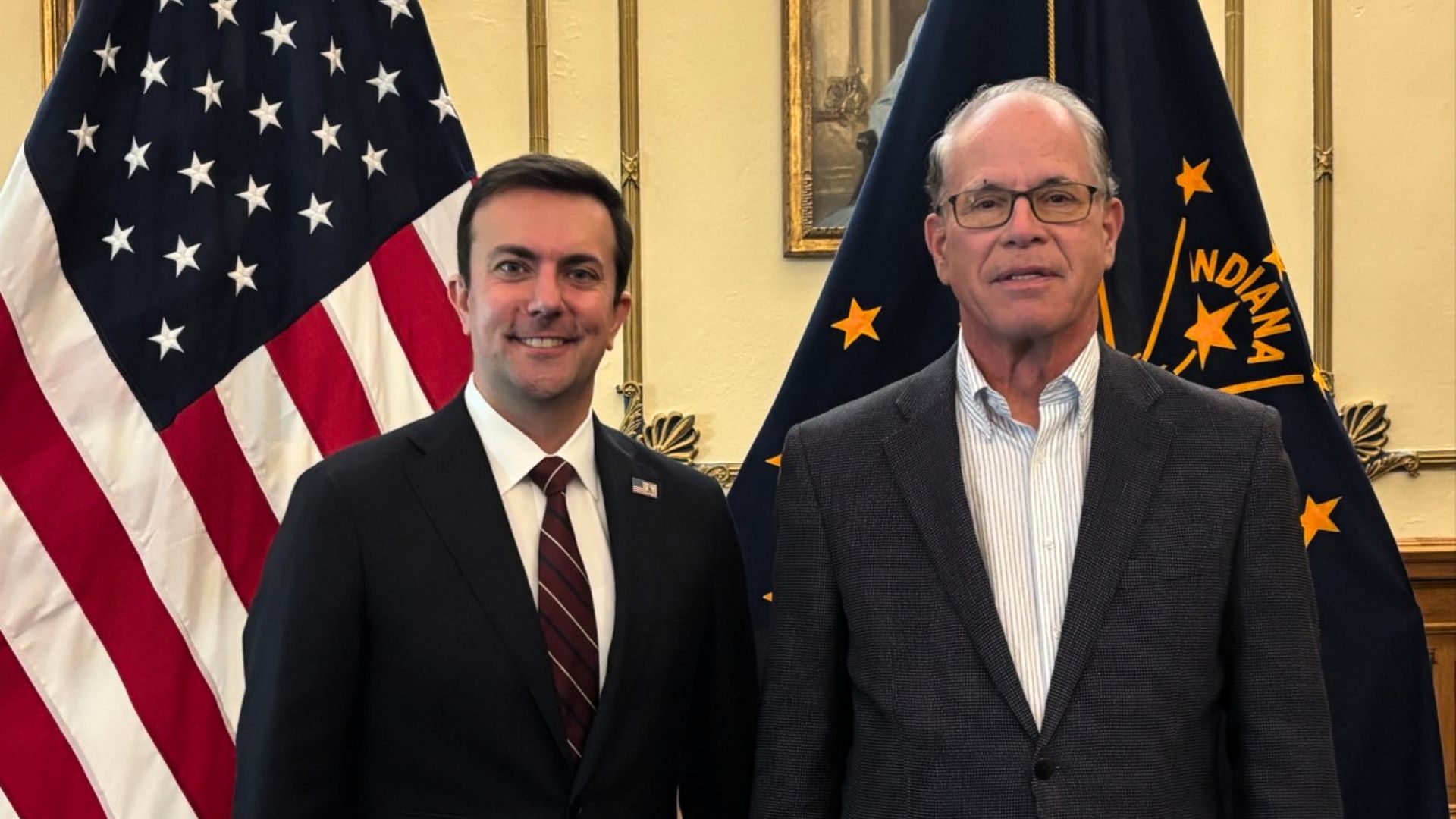
Credit: Gov. Mike Braun’s Office
EPA Deputy Administrator David Fotouhi joined Gov. Mike Braun and other officials at the Indiana Statehouse for the announcement. Federal officials said state administration could provide greater regulatory certainty and allow decisions to reflect local conditions. Braun said Indiana would continue holding companies to environmental standards under the state-led system.
Indiana has spent years building the program. State legislation adopted in 2021 directed IDEM to establish a state permitting framework. The Indiana Environmental Rules Board gave final approval to the CCR rules in December 2025, and IDEM submitted its application to EPA on June 26, 2026.
The state rules largely mirror federal requirements and address facility location, design and operation, groundwater monitoring, corrective action, closure, post-closure care, recordkeeping and public reporting. EPA said its preliminary review found Indiana’s program meets federal standards for approval.
The issue carries significant environmental consequences. Coal ash can contain contaminants including mercury, cadmium and arsenic, and improper storage can threaten groundwater and nearby waterways.
Environmental advocates have also raised questions about what happens if federal standards change. Indra Frank of the Hoosier Environmental Council told WFYI that Indiana’s current rule is strong, but noted that a 2023 state law limits Indiana from imposing coal ash requirements more stringent than federal standards. IDEM said future federal changes would have to be evaluated as they occur.
EPA will accept public comments for 60 days after the proposal is published in the Federal Register. A hybrid public hearing is scheduled for Nov. 12 at 2 p.m. Eastern at the Indiana Government Center South in Indianapolis before EPA makes its final decision.


