
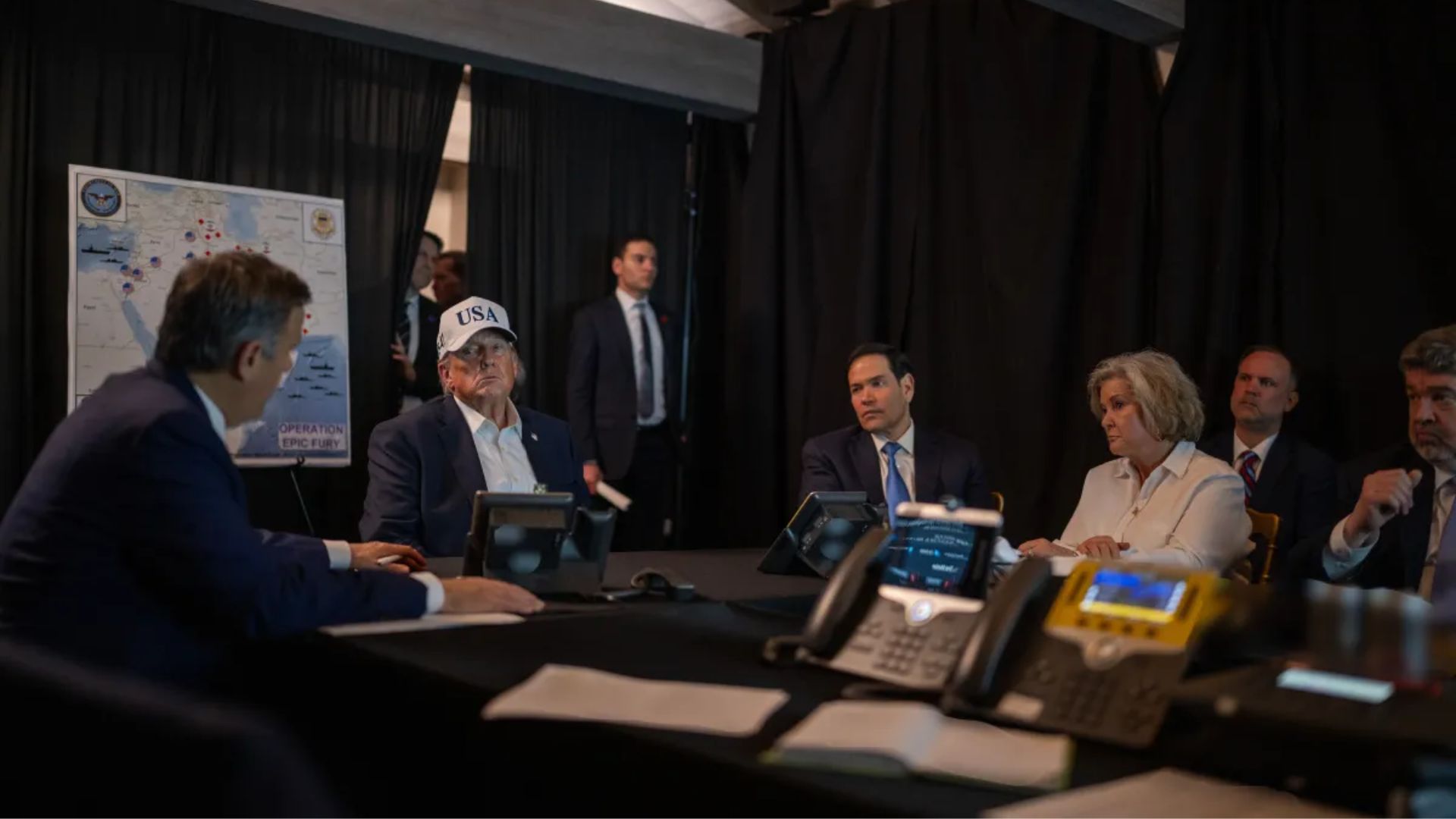
Washington, D.C. – A new and explosive allegation surrounding President Donald Trump’s handling of the Iran crisis has reignited fears about the immense power held by a U.S. president in moments of military confrontation.
At the center of the controversy is a claim that Trump attempted to move toward using the nation’s nuclear launch authority but was stopped by a senior military leader before any such action could advance further.
The accusation, while not independently verified by major news organizations, has rapidly added fresh urgency to an already heated debate over presidential war powers, military restraint and the risks of brinkmanship during international conflict.
The report emerged as Trump’s rhetoric toward Iran had already been drawing growing concern both at home and abroad.

Credit: The White House
In recent weeks, the confrontation between Washington and Tehran has produced a stream of sharp threats, military warnings and deepening questions about how close the administration may have come to a broader regional war. Against that backdrop, the nuclear-codes allegation has resonated far beyond the original report, not only because of its dramatic nature, but because it fits into a wider atmosphere of escalating language and visible tension inside the national security establishment.
Even without public proof that a nuclear order was ever formally issued, the claim has struck a nerve among critics who argue that it highlights a dangerous concentration of executive power. For years, scholars, arms-control advocates and lawmakers have warned that the American president has extraordinary unilateral authority over nuclear weapons, with only limited immediate checks in a fast-moving crisis. The latest allegation has brought that issue back into focus, raising uncomfortable questions about what happens when military judgment and presidential will appear to collide.
The wider context has only intensified that concern. Trump’s recent statements on Iran have been among the most aggressive of the current standoff, fueling alarm among foreign policy observers and even some figures within his own political orbit.
Public reporting from multiple outlets has described a climate in which threats of further strikes, warnings of severe retaliation and uncertainty over intelligence assessments all combined to create a deeply unstable environment. In that setting, any suggestion that nuclear options were even discussed, let alone nearly pursued, carries enormous political and strategic weight.
Supporters of the president are likely to dismiss the report as exaggerated, politically motivated or impossible to substantiate. And for now, the absence of independent confirmation leaves the most sensational part of the story in disputed territory. Still, the allegation has found a receptive audience because it lands in the middle of a real and well-documented crisis, one defined by escalating military posture and increasingly stark presidential language.
What remains clear is that the episode has reopened one of the most serious debates in American government: whether any one person should have such sweeping authority in matters that could alter the course of history in minutes. If the allegation is eventually disproved, the political damage may still linger because it reflects broader anxieties that were already present. If more evidence emerges, the fallout could be far more severe.


