
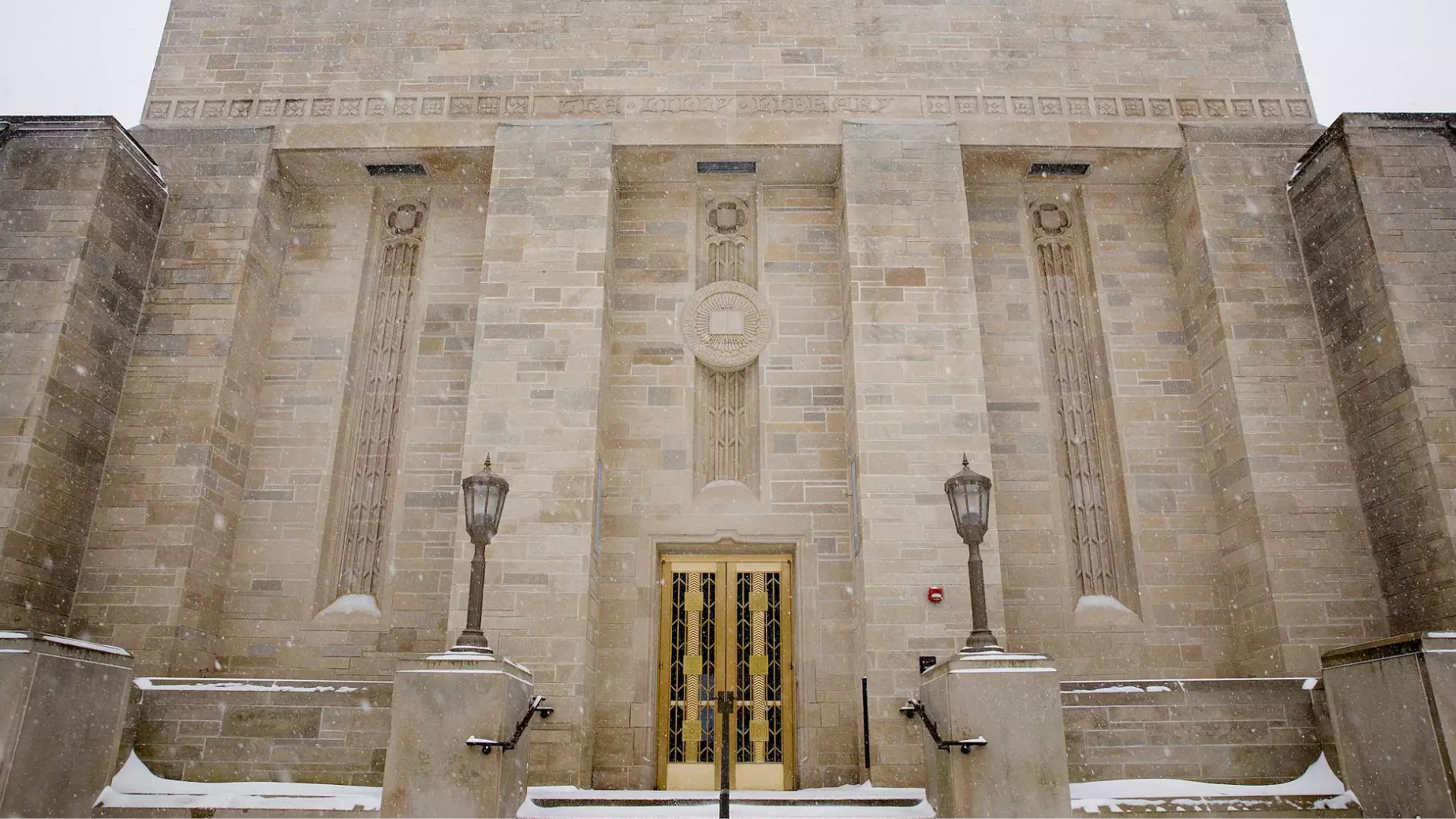
Bloomington, Indiana – The Lilly Library at Indiana University is set to receive a second $2.5 million grant to further strengthen its rare religious collections and enhance public engagement with materials that have shaped faith traditions around the world. The new endowment will fund a permanent cataloger of religious materials and support a traveling exhibition, continuing the work established by an initial $2.5 million grant that endowed the library’s first curator of religious collections. Provided by Lilly Endowment’s Religion and Cultural Institutions Initiative, the funding is designed to support scholarly research and public understanding of the enduring role of religion in daily life.
For decades, scholars have relied on the Lilly Library’s collections to examine faith perspectives and their historical influence. The library, home to one of the New Testament copies of the Gutenberg Bible among other treasures, houses rare books, manuscripts, hymnals, and writings that span over a millennium. These holdings reflect a broad spectrum of faith traditions from around the globe, offering insight into how religious ideas and practices have been transmitted across generations. The new cataloger position aims to broaden the accessibility of these collections beyond academic circles, ensuring that scholars, students, and the public can more easily discover and explore these invaluable materials.
“Special collections catalogers describe library materials so that people know they exist,” said Diane Dallis-Comentale, Ruth Lilly Dean of Indiana University Libraries. “Without online records, items of major relevance to a multitude of religious traditions are physically protected but remain generally unknown. We are so grateful for this grant, which supplies the talent necessary to bring these extraordinary literary and spiritual artifacts to life.”
The Lilly Library has long been a cornerstone of Indiana University’s academic and cultural landscape. Its collections not only preserve rare and historical works but also provide a platform for learning, exploration, and engagement with ideas that span centuries. IU Bloomington Chancellor David Reingold emphasized the library’s significance to the campus community and beyond.
“The Lilly Library and its collections are a gem of IU Bloomington and a point of great pride,” Reingold said. “Important work is carried out there by the staff and faculty, which plays a vital role in the academic and cultural life of our campus. This funding will strengthen the library’s mission to preserve significant materials that represent the pinnacle of human thought across history. This gift is a commitment to ensure these resources remain accessible to scholars and the public for generations to come. We are very grateful.”
Admission to the Lilly Library is free, and its holdings are accessible to students, scholars, and members of the public. By engaging with the library’s religious materials, audiences gain insight into the ways in which religious ideas, texts, and imagery have influenced societies, cultural norms, and intellectual traditions over centuries.
“The religious materials held at the Lilly Library comprise a remarkable resource for the residents of Indiana, and also for the world at large,” said Joel Silver, director of Lilly Library. “They have been assembled and preserved by Indiana University for more than a century. The cataloger of religious materials will ensure that accurate and detailed information about the library’s holdings will be available to all, and we are immensely grateful to Lilly Endowment Inc. for providing the support to make this position possible.”
The first phase of the Lilly Library grant established Sarah McElroy Mitchell as the inaugural curator of religious collections. Her work has focused on raising the profile of religious materials through exhibitions, presentations, and digital and traditional outreach. Under Mitchell’s stewardship, religious texts have been featured prominently in the library’s major exhibitions, including Receding Horizons: A Celebration of Astronomy at Lilly Library, held during the total eclipse in 2024, and Love in the Library: The Romance Novel in English, which followed later that year.
“I have been building toward a major exhibition for fall 2027 that will focus on the topic of religious pilgrimage,” Mitchell said. “Pilgrimage spans numerous religious traditions, which will allow us to highlight many stories and to honor the different motivations and experiences of pilgrims.” The 2027 exhibition will be expanded into a traveling display, thanks to the new grant, allowing audiences outside Bloomington to experience these rare materials and the narratives they preserve.
Mitchell has also partnered with IU faculty to integrate the library’s religious materials into coursework. In one example, medieval manuscripts were incorporated into an Introduction to Christianity class, giving students a tangible connection to texts and ideas that have influenced Western religious thought for centuries.
The search for the newly endowed cataloger of religious materials will be led by Amy Tims, head of cataloging and description at Lilly Library. Tims oversees cataloging, archival processing, and stacks management, and she emphasized the critical role that cataloging plays in making collections accessible.
“This position is particularly exciting because establishing an endowed cataloging role with grant funding is a rare and significant accomplishment,” Tims said. “Without catalogers and archivists creating accurate descriptions, materials can’t be found, leading to inefficiencies and, sometimes, a reputation for hoarding rather than sharing resources. Cataloging provides both physical and intellectual control of collections, ensuring items are described and accessible.”
Tims noted that cataloging has evolved significantly over time. Libraries and museums have moved from traditional card catalogs to electronic systems, and today, catalogers must balance technical skills with deep subject knowledge spanning multiple disciplines and centuries. Accurate descriptions allow researchers to find materials quickly and understand their context, while ensuring that rare items are preserved and used responsibly.
The Lilly Library’s collections are extensive, including not only printed books and manuscripts but also ephemeral materials, maps, and unique documents that provide context for the study of religion, culture, and history. From illuminated medieval manuscripts to modern printed hymnals, the library’s holdings offer both academic and personal enrichment. The new cataloger will help ensure that each item is discoverable, enhancing the library’s mission to share knowledge widely.
The endowment also underscores Lilly Endowment’s ongoing commitment to religion and cultural institutions. By funding positions that combine curatorial expertise with public engagement, the initiative aims to deepen understanding of the role of religion in society and provide resources for lifelong learning.
“This grant is a continuation of the work begun with the first phase,” Dallis-Comentale said. “Together, these endowed positions allow the Lilly Library to preserve its extraordinary materials while sharing them with students, scholars, and the public. It is about creating a bridge between rare collections and the communities that can benefit from them.”
The second $2.5 million grant reflects a broader trend in library and cultural funding: supporting staff and infrastructure as much as the physical objects themselves. In doing so, institutions like Lilly Library ensure that their collections remain alive and relevant, not only for research but also for public education and appreciation.
As preparations continue for the 2027 religious pilgrimage exhibition and the recruitment of the new cataloger, Lilly Library staff are optimistic about the long-term impact of this support. The grant will allow the library to maintain its standing as one of the premier repositories of religious texts and artifacts in the United States, while expanding access to audiences worldwide.
For those interested in exploring Lilly Library’s collections, admission is free, and its rare books, manuscripts, and special materials are available to students, scholars, and the public. The new cataloger will help ensure that these resources are easier to find, study, and appreciate, opening new opportunities for learning and discovery.
The $2.5 million grant marks a pivotal moment for the Lilly Library, bridging the preservation of historical religious materials with innovative approaches to public engagement and scholarship. By combining curatorial expertise, cataloging excellence, and thoughtful exhibitions, Indiana University continues to provide a window into the ways religious ideas have shaped human culture and history—an endeavor that will benefit generations to come.


